Theo Michael
Polyurethane intestine
February 14th to April 26th, 2026
Museo de la Ciudad de Querétaro, Qro., México
Text by Gaby Cepeda
A spirit of disobedience pervades Theo Michael's practice. It refuses to be pinned down,
to submit to a genre, a media, a market. It is most definable as constantly straying from
predetermined categories, and it's a logic that is immanent to the works themselves.
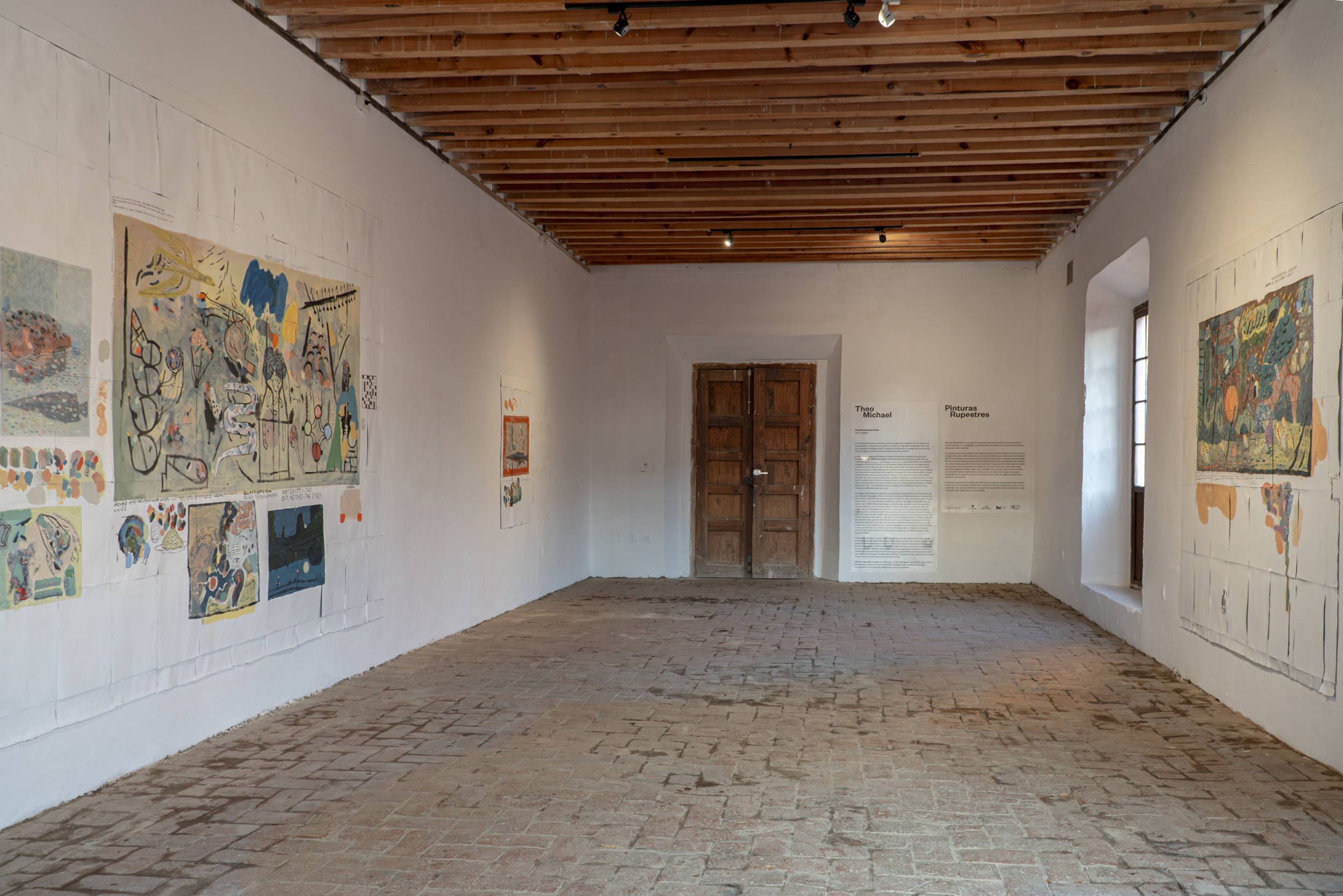
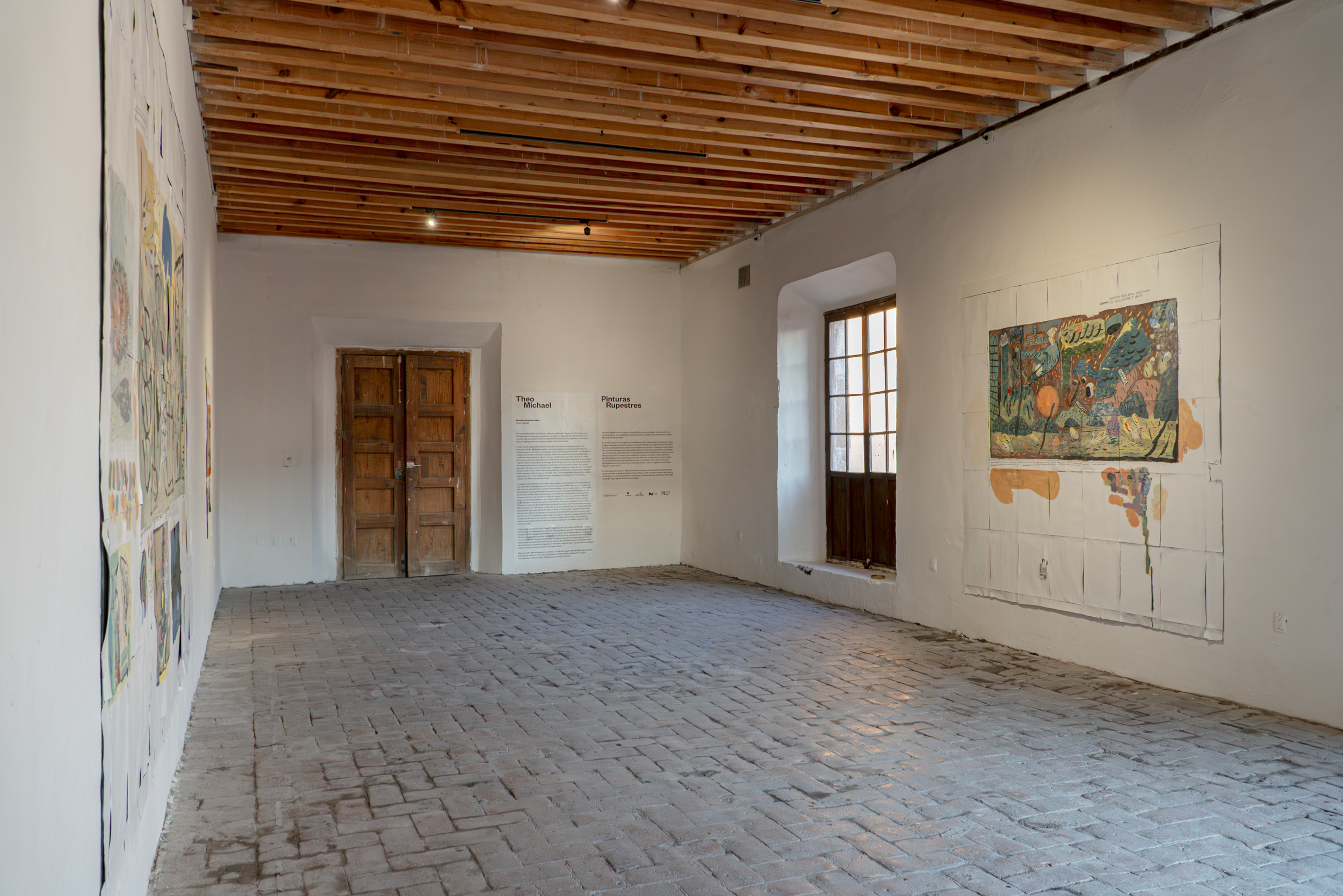
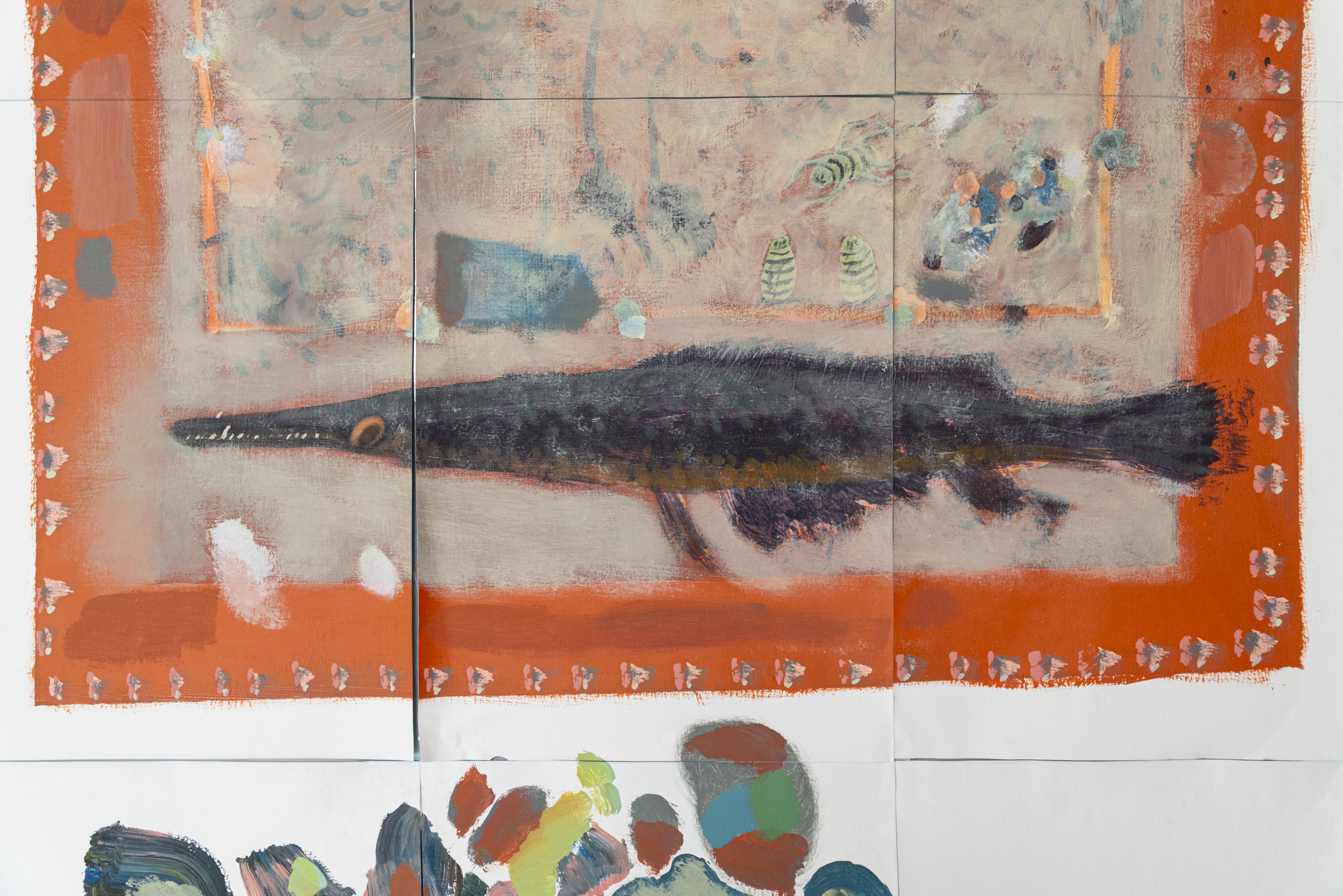
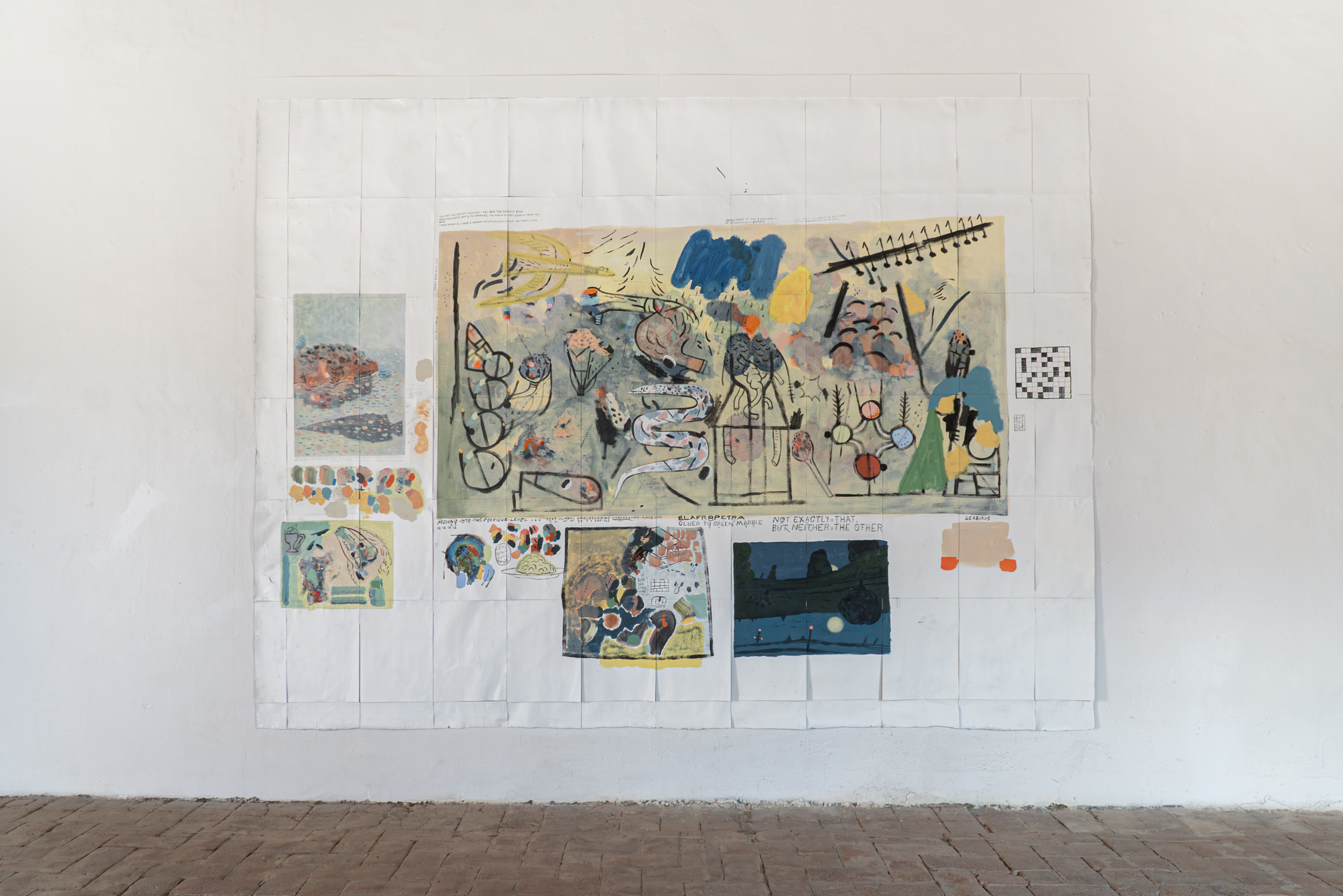
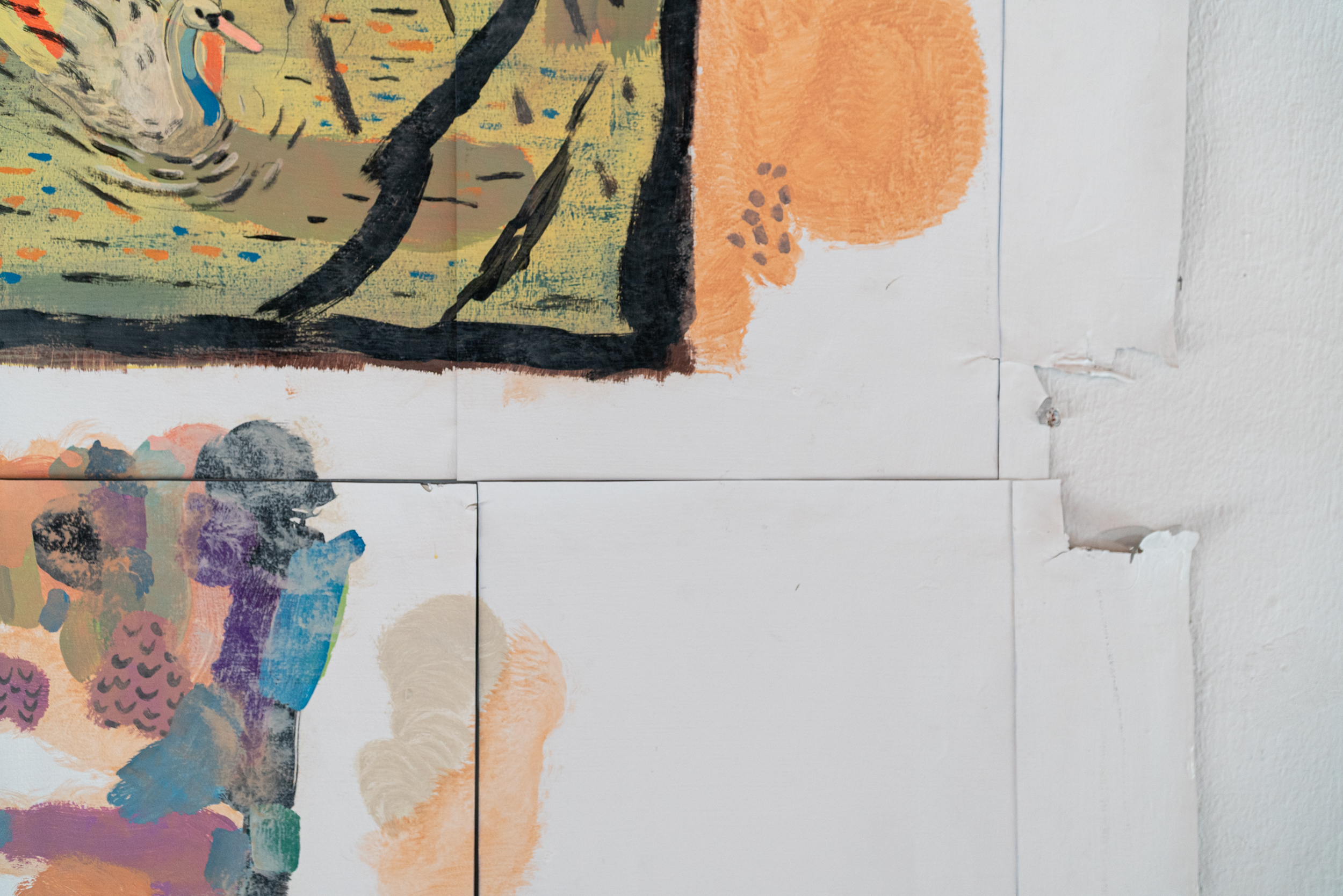
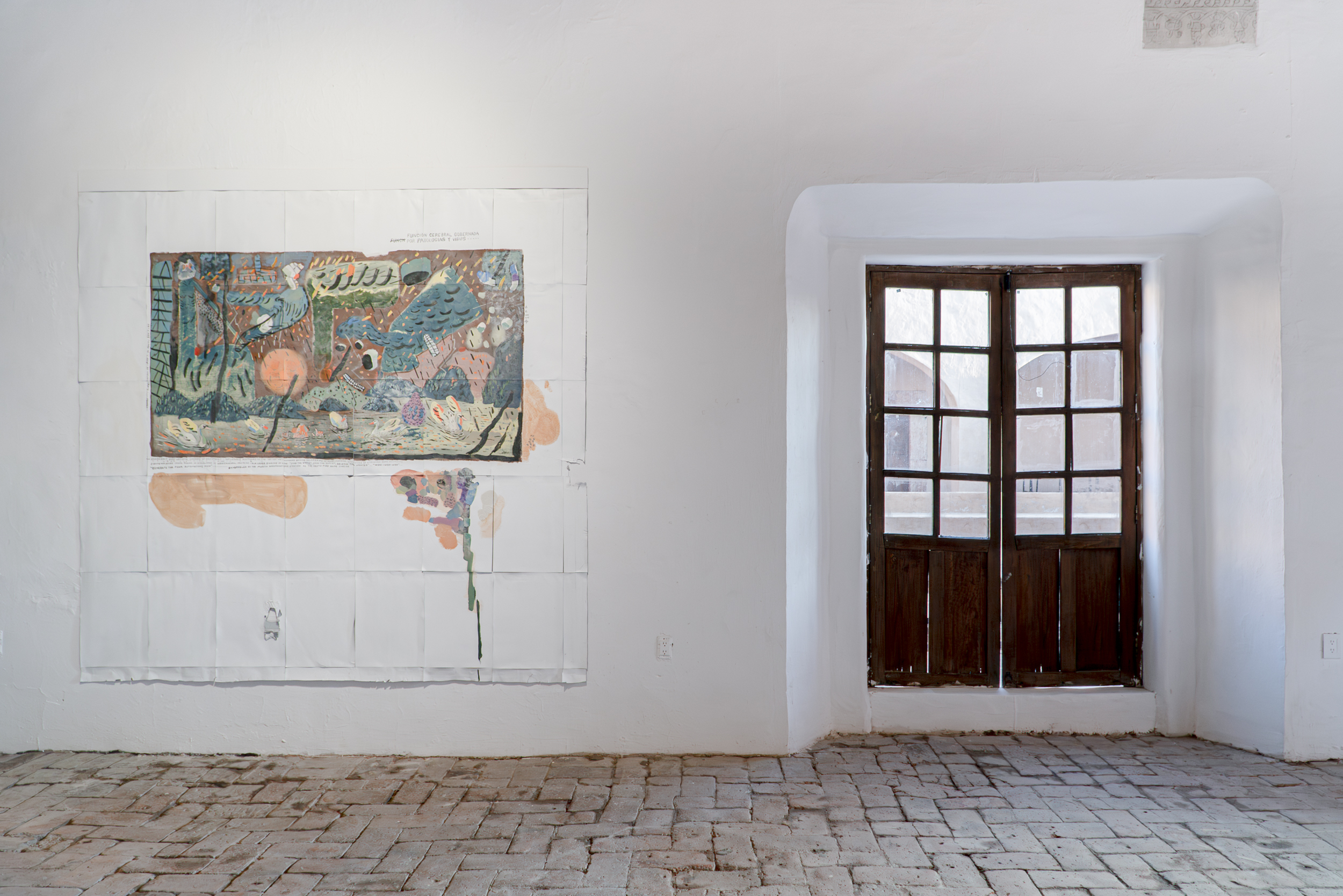
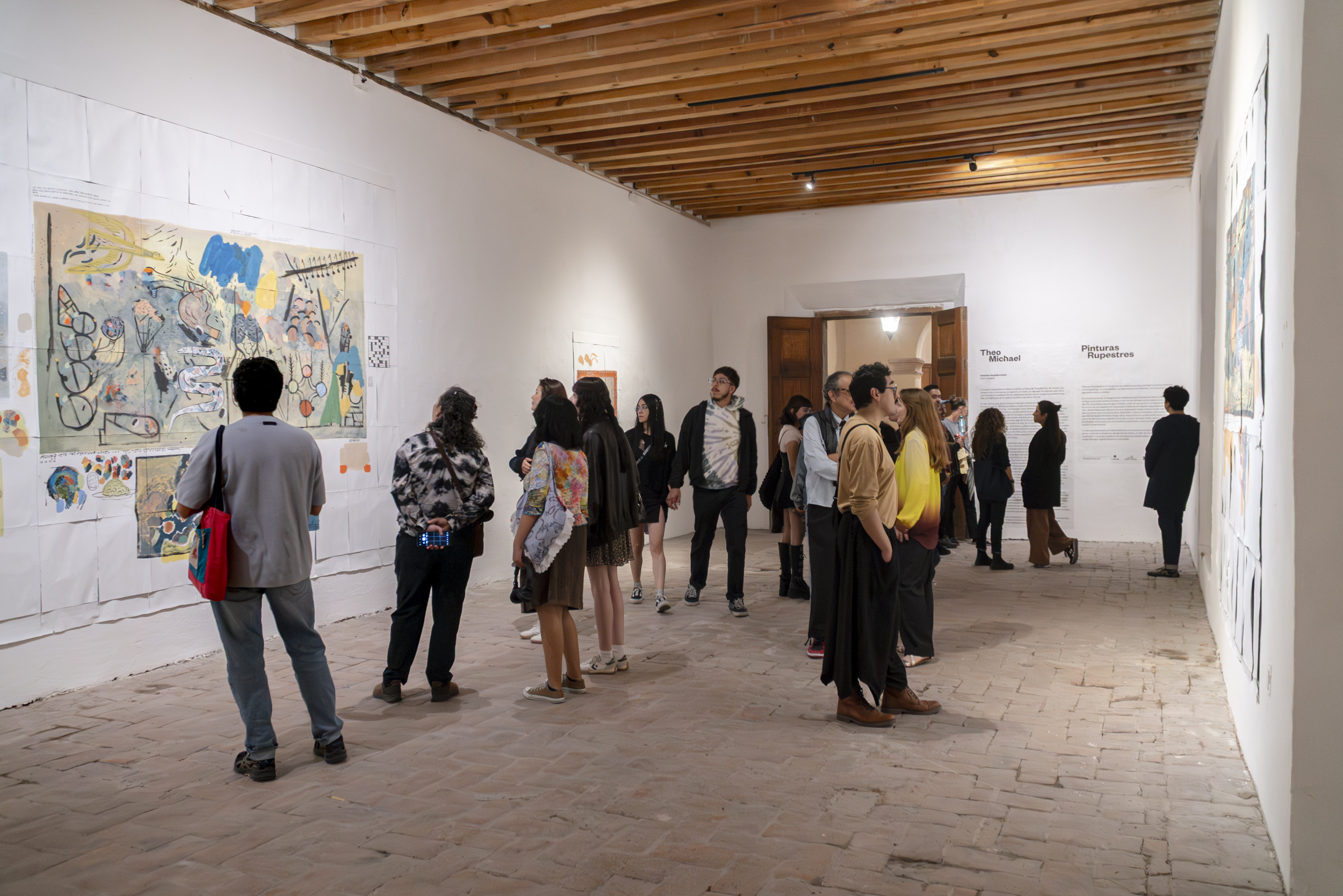
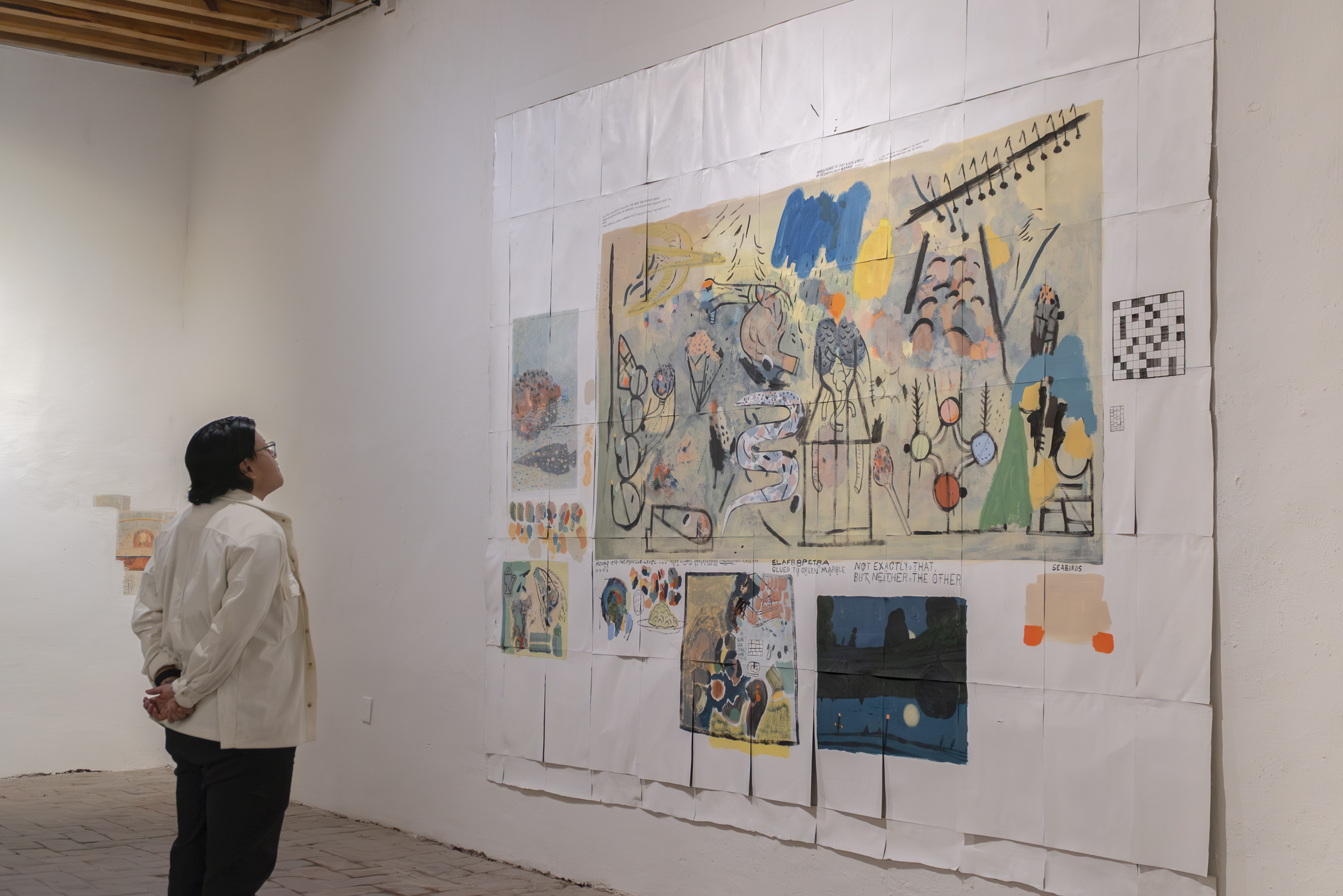
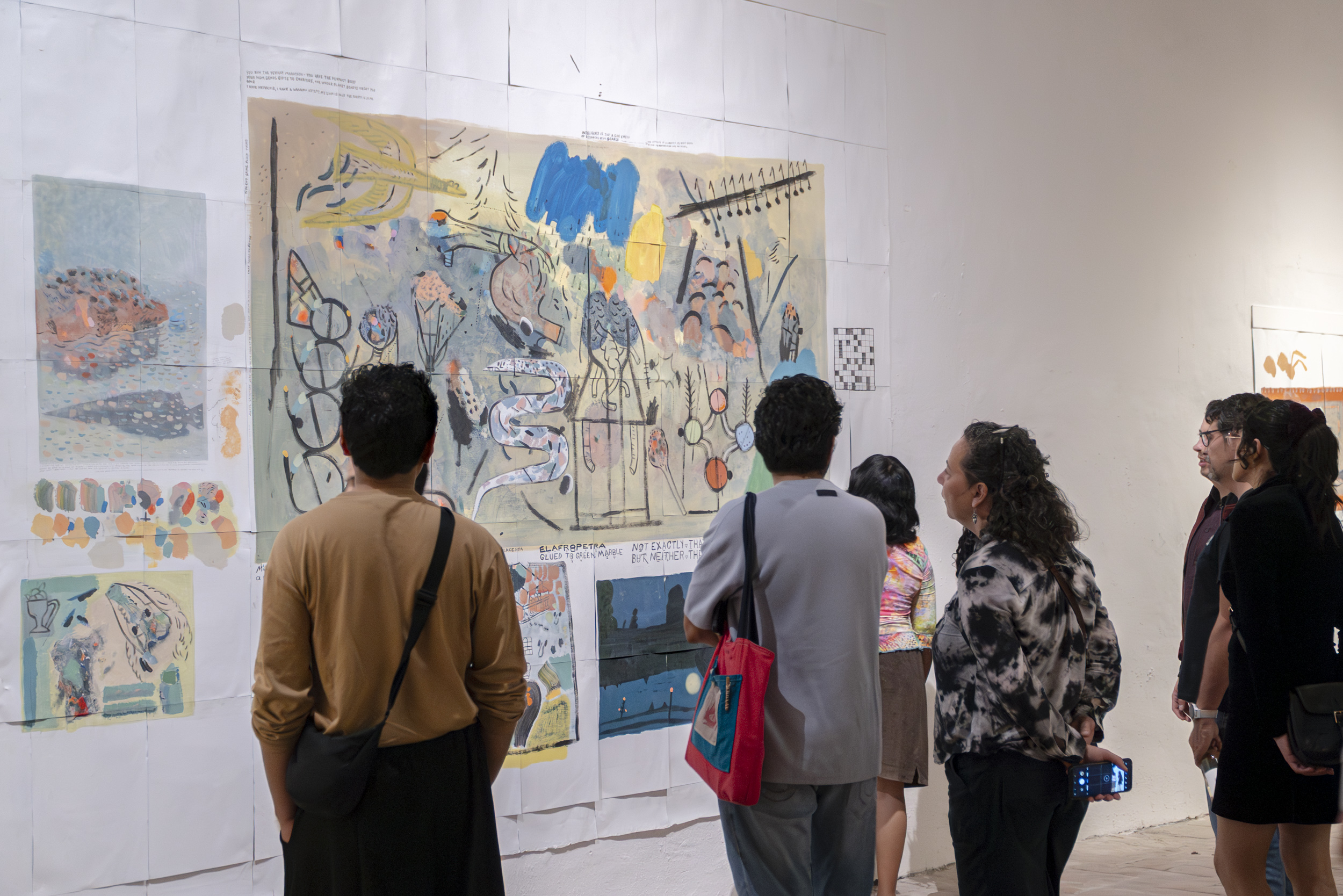
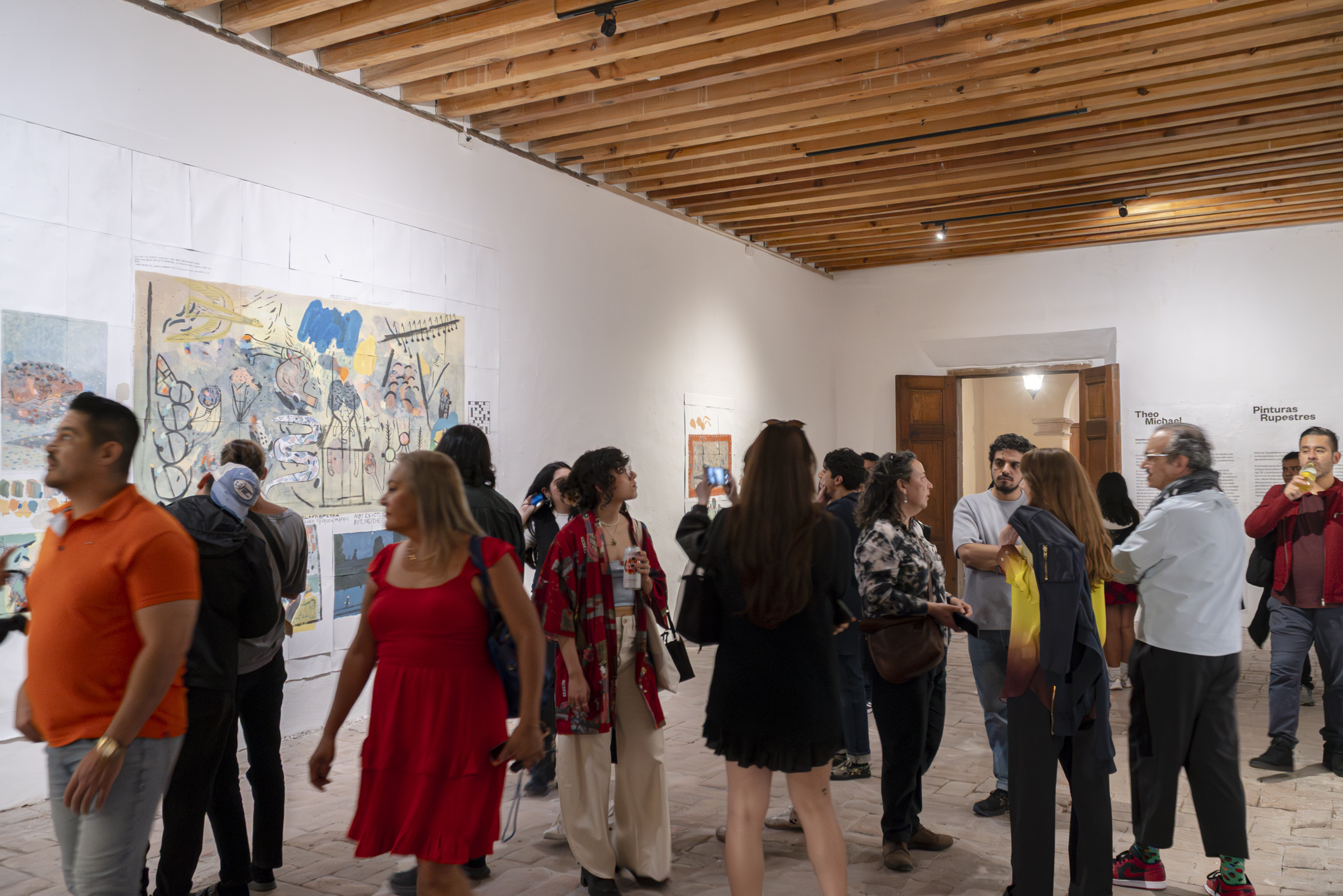
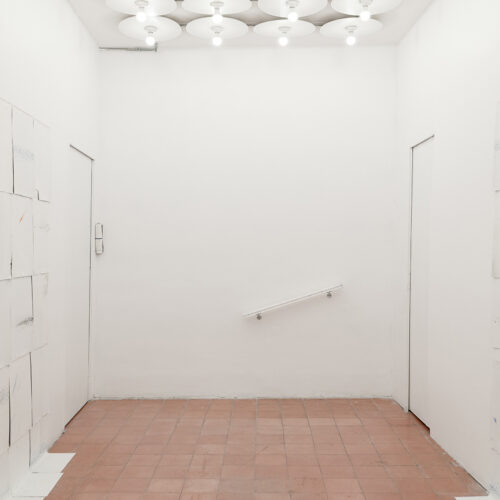
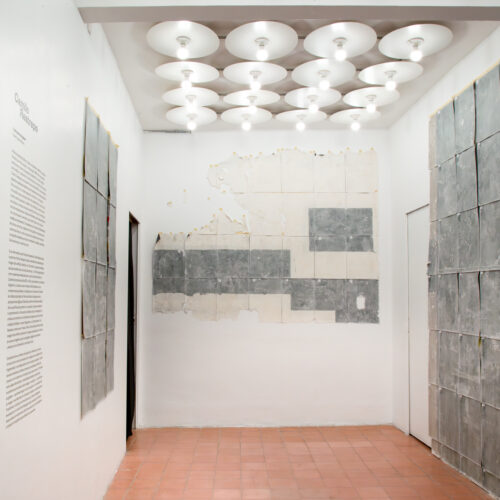
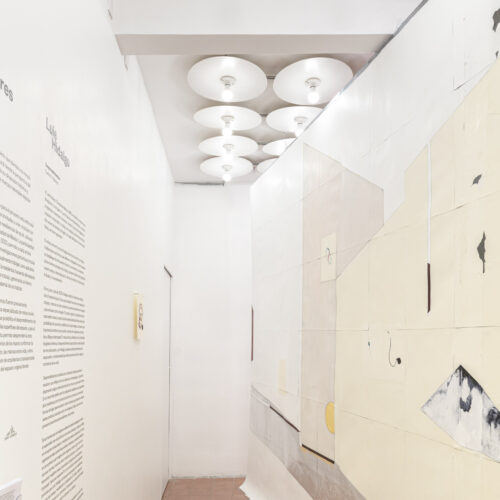
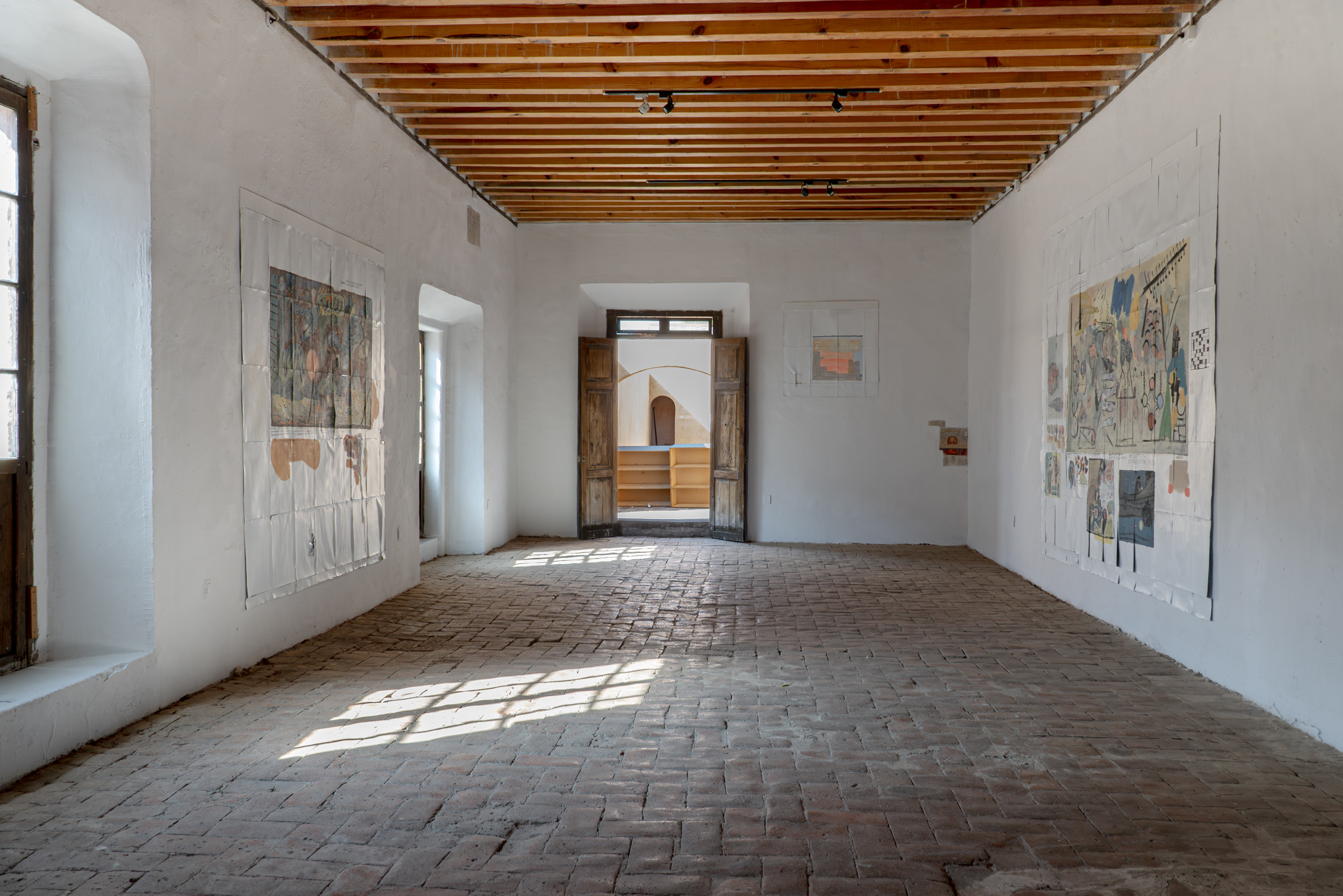
In the same vein, eschewing more of the same, during his time at the Op.cit. Foundation, Michael devoted himself to creating his first murals. True to his fickleness, they are ephemeral—they peel off like giant stickers at the end—and were made with Comex paint, the kind used to paint walls. They represent an abstraction, no less absurd for that, of the interests and obsessions that have shaped his practice to date: the ideal of collapse, empirical, the eventual disintegration of society and the institutions that still give it some form; but more broadly, the collapse of hierarchies, of one culture over another, of one type of human over another, of animals over humans, among others. The largest piece is something like a mapping of the unprecedented comings and goings of our conspiracy-ridden present: here, a molecule being altered, next to a crack pipe, next to the blackened lungs of our planet; there... intestines turned into snakes, all bathed in toxic rain and surrounded by different types of weapons.
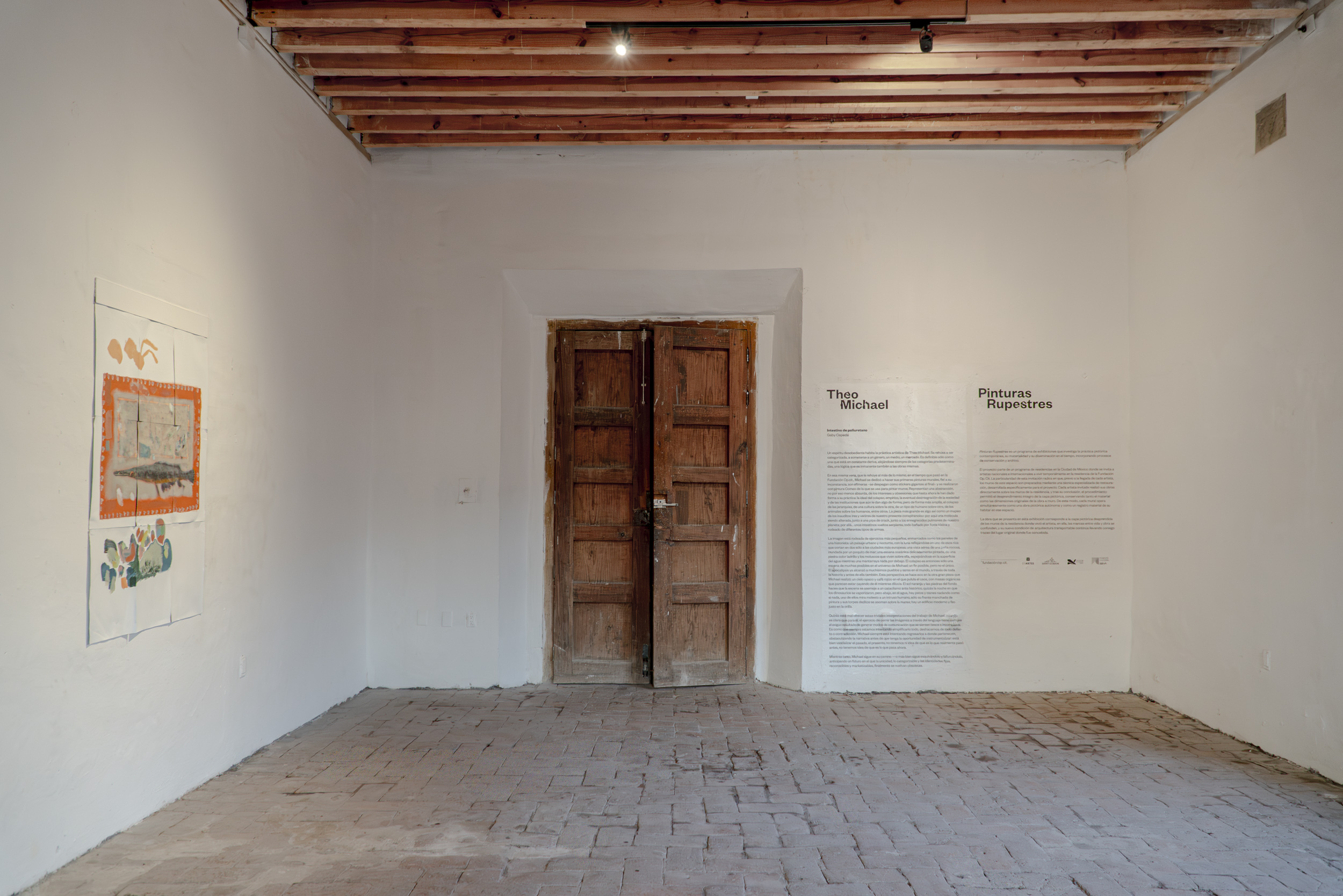
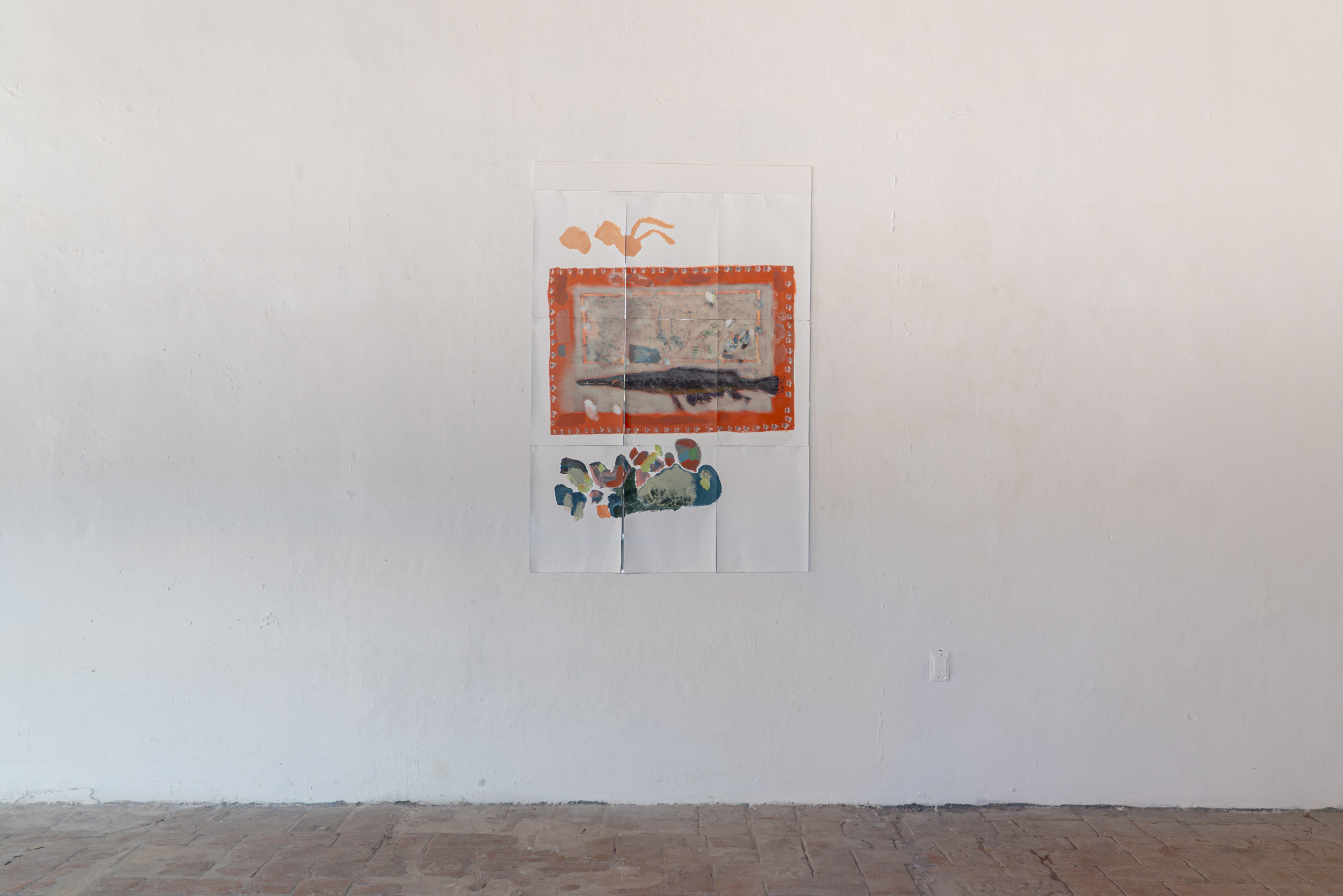
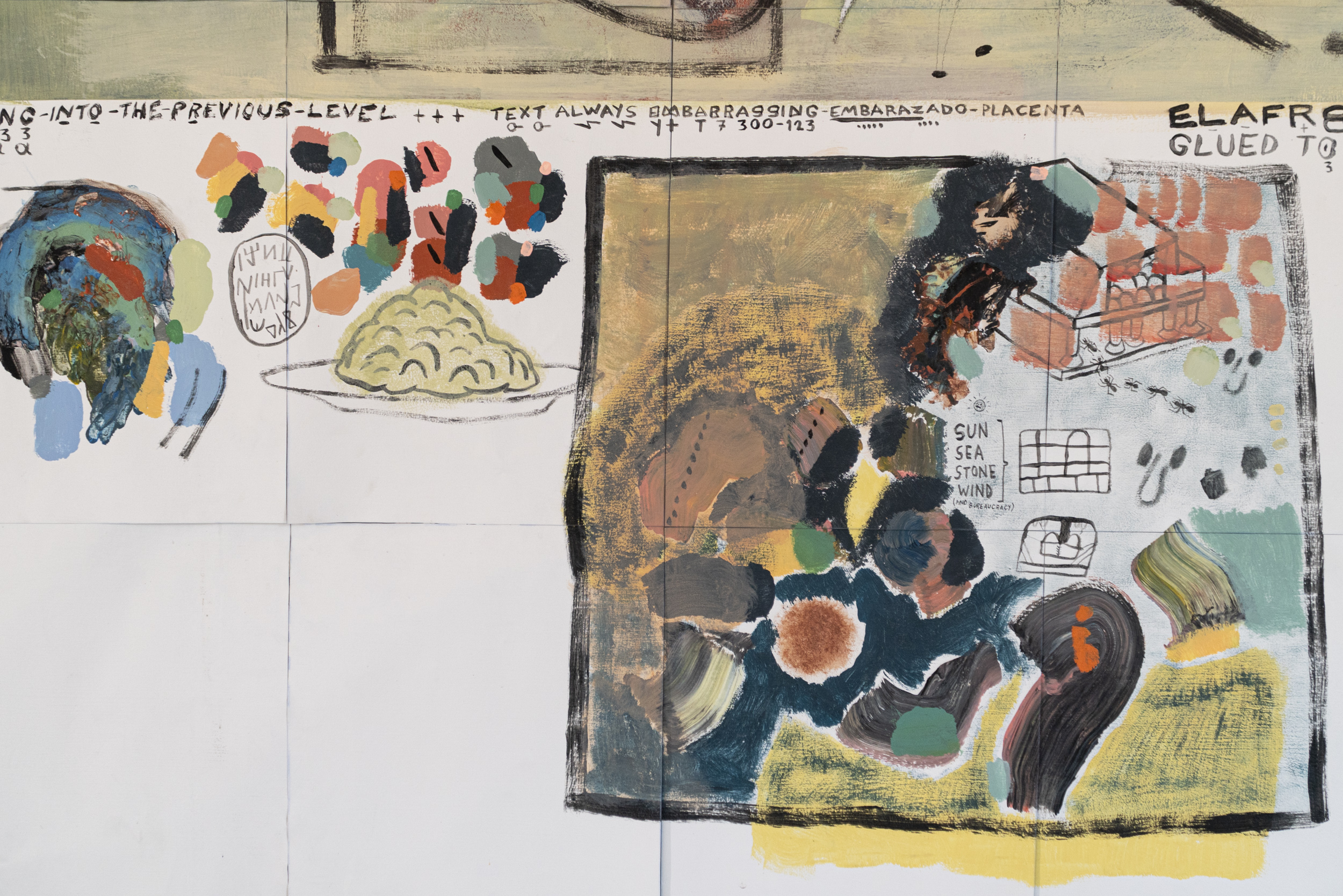
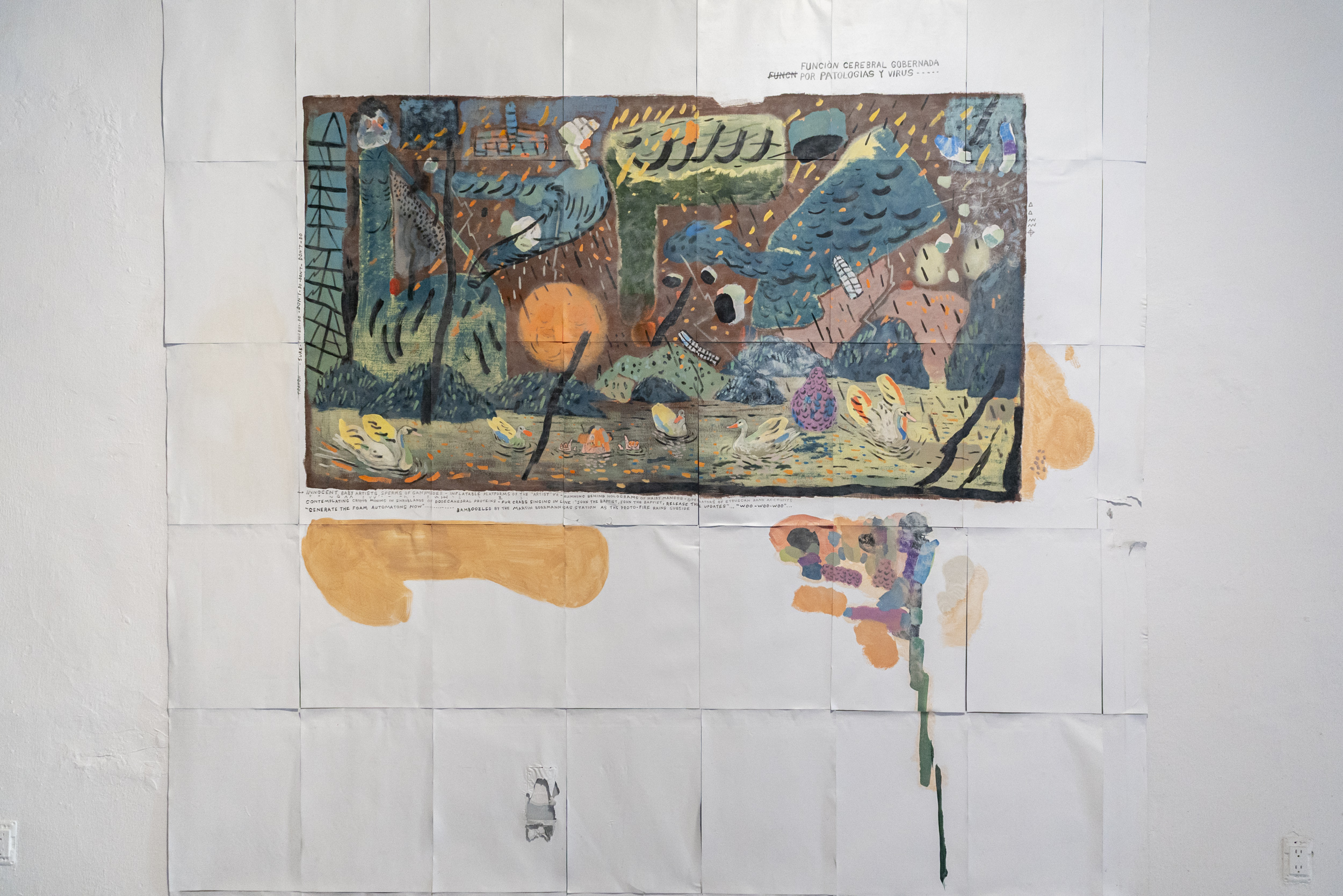
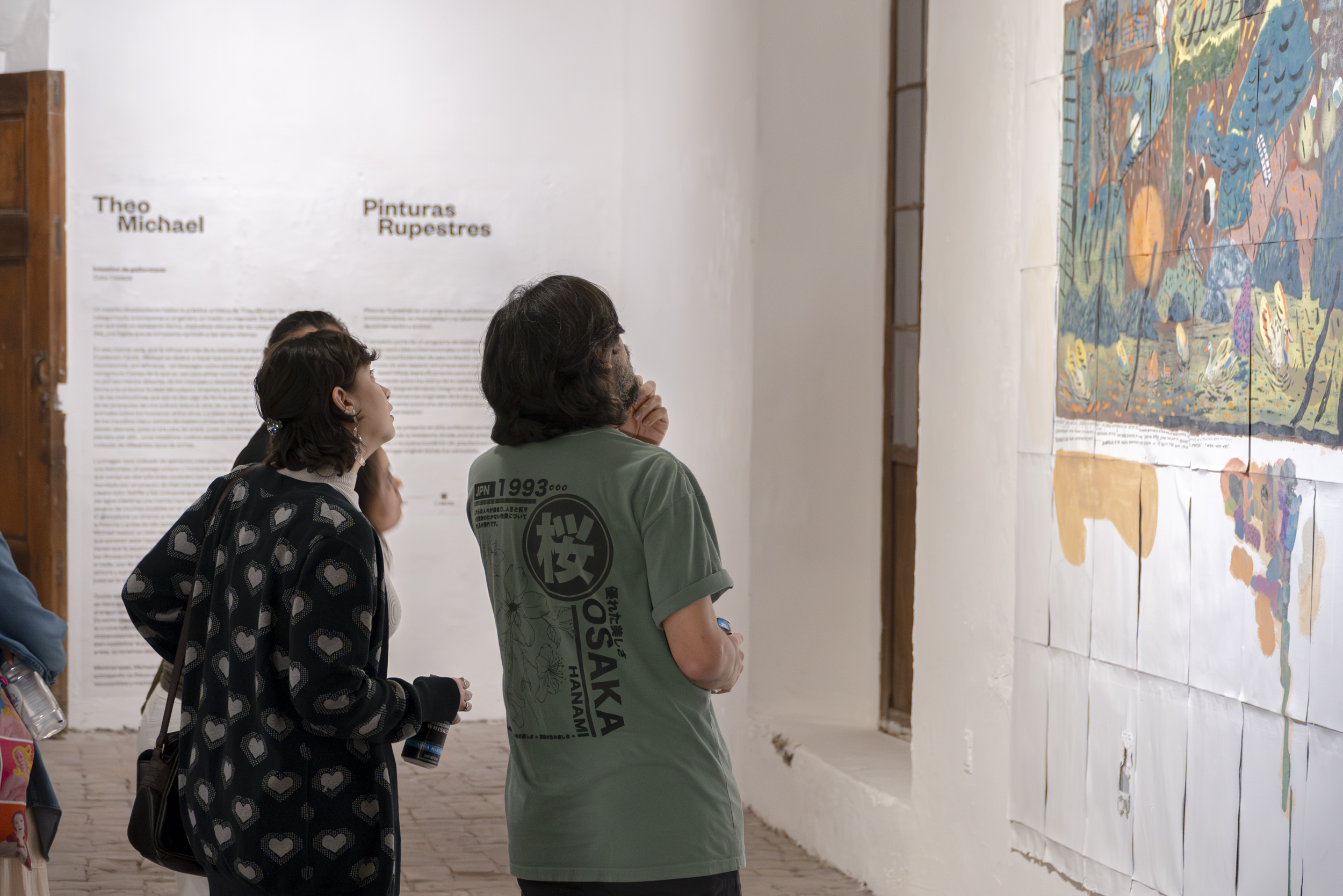
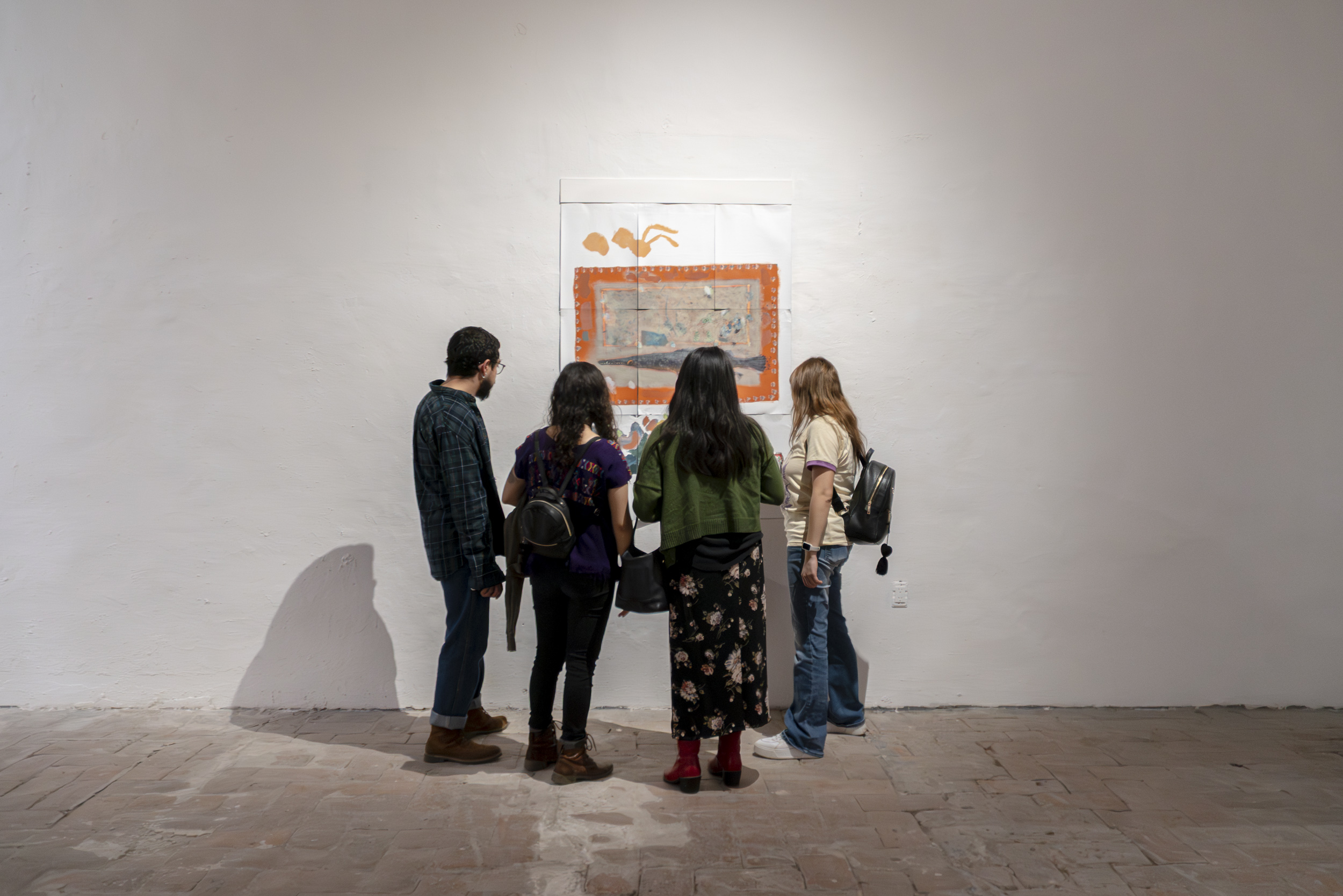
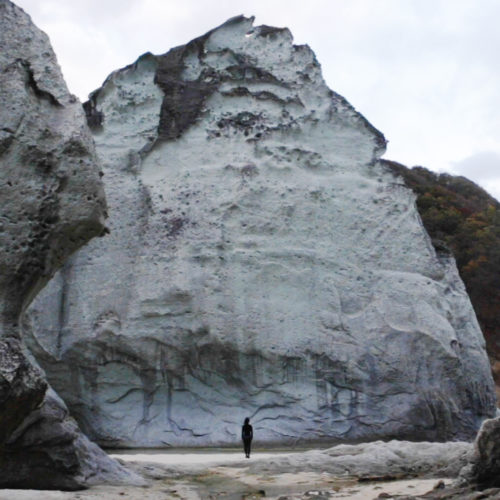
The image is surrounded by smaller exercises, framed like comic book panels: an urban nightscape, with the moon reflecting on one of those rivers that cut through only the most European cities; an aerial view of a rocky crag, flooded by a little bit of sea; a delicately painted ocean scene, with a brick-colored stone and the mollusks that live on it, mirroring themselves on the surface of the water while a manta ray swims below. The collapse is then just one scene of many possible ones in Michael's universe; a possible end, but not the only one. The apocalypse has already reached many peoples and beings in the world, throughout history and before it as well. This perspective is echoed in Michael's other great piece: an opaque, reddish-brown sky swarming with chaos, with organic masses that seem to be falling from it as it pours rain. The orange sun and the stones in the background make the scene resemble a prehistoric cataclysm, perhaps the night the dinosaurs vaporized, but below, in the water, there are ducks and swans swimming as if nothing had happened, one of them looking annoyed at a human intruder, only his paint-stained forehead and clumsy little fingers peeking out above the tide; there is an ugly modern building right on the shore.
Perhaps it is wrong to offer these trivial interpretations of Michael's work, when it is clear that for him, the exercise of sifting through images through language always has the meager result of generating modes of communication that feel stiff and incomplete. It's as if we are always trying to simplify everything, to get rid of every flaw or contradiction. Michael is always trying to return them to where they belong, obstructing the narrative before it has a chance to instrumentalize: it's okay to vandalize the past, the present, we have no idea what really happened before, we have no idea what is happening now.
Meanwhile, Michael continues on his path—or rather, continues to dodge and branch off from it, anticipating a future in which uniqueness, categorizability, and fixed, recognizable, marketable identities will finally become obsolete.
Theo Michael was born in Panorama, Greece in 1978. He is an interdisciplinary artist with Greek, British, and Mexican nationalities. His work has been described by other artists as “drunken anthropology.” Michael's drawings, sculptures, and mosaics use references from archaeology, science fiction, and natural history to engage in an exercise of constructing alternative worlds, where the boundaries and hierarchies between cultures and species have collapsed. Through an idiosyncratic visual language, Michael constructs immersive, quasi-fictional realms, inviting the viewer to navigate spaces where the familiar and the fantastic coexist and intersect. He has recently presented solo exhibitions at the George Benias Gallery, Guadalajara 90210, Expositivo, Casa del Lago UNAM, and Galerie Vallois, among others, and has participated in group exhibitions at the ACME Salon, Proyectos Multipropósito, L.A. Beast Gallery, Museo Anahuacalli, Pequod Co., and MASA Galería. Theo Michael holds a Bachelor of Fine Arts degree from Aristotle University, GR, and a Master of Fine Arts degree from Wimbledon College of Art, UK.