Ana Bidart
Loose Notes
June 7th to July 5th, 2025

Text by María Minera
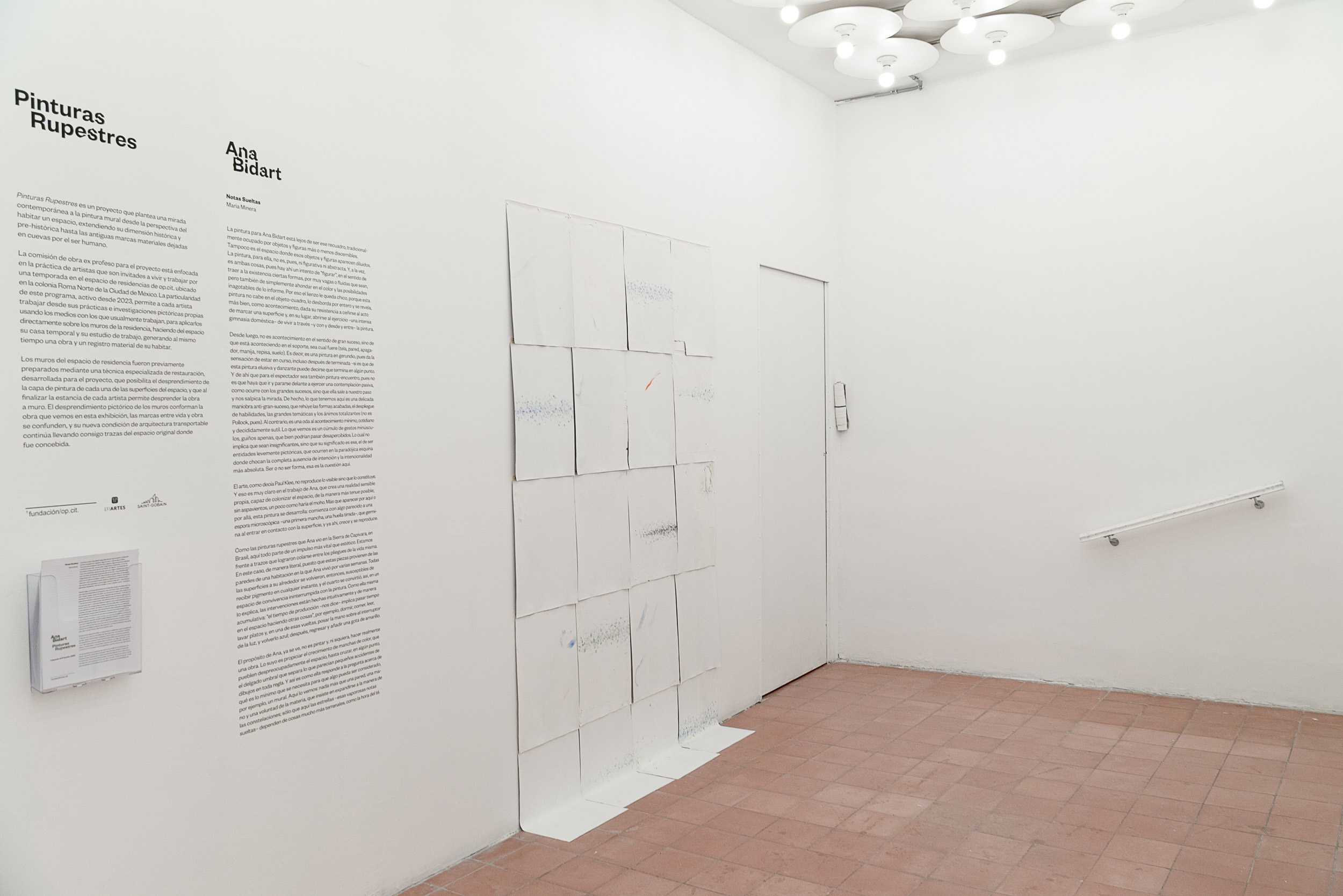
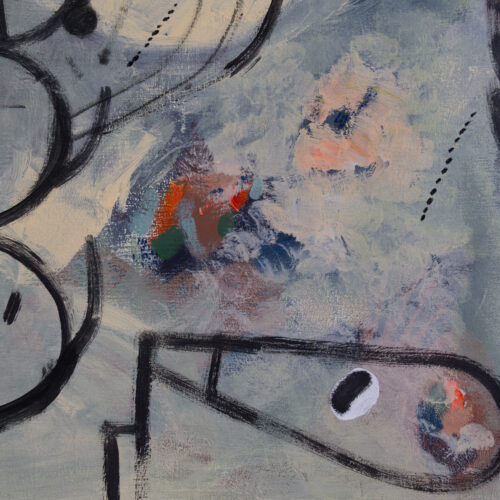
Painting for Ana Bidart is far from being that box, traditionally occupied by more or less discernible objects and figures. Nor is it the space where these objects and figures appear diluted. Painting, for her, is therefore neither figurative nor abstract. And, at the same time, it is both, for there is an attempt to ‘figurate’, in the sense of bringing certain forms into existence, however vague or fluid they may be, but also simply to delve into colour and the inexhaustible possibilities of the formless. That is why the canvas is too small for him, because this painting does not fit into the picture-object, it overflows it entirely and reveals itself, rather, as an event, given its reluctance to stick to the act of marking a surface and, instead, to open up to the exercise - an intense domestic gymnastics - of living through - and with and from and between - painting.
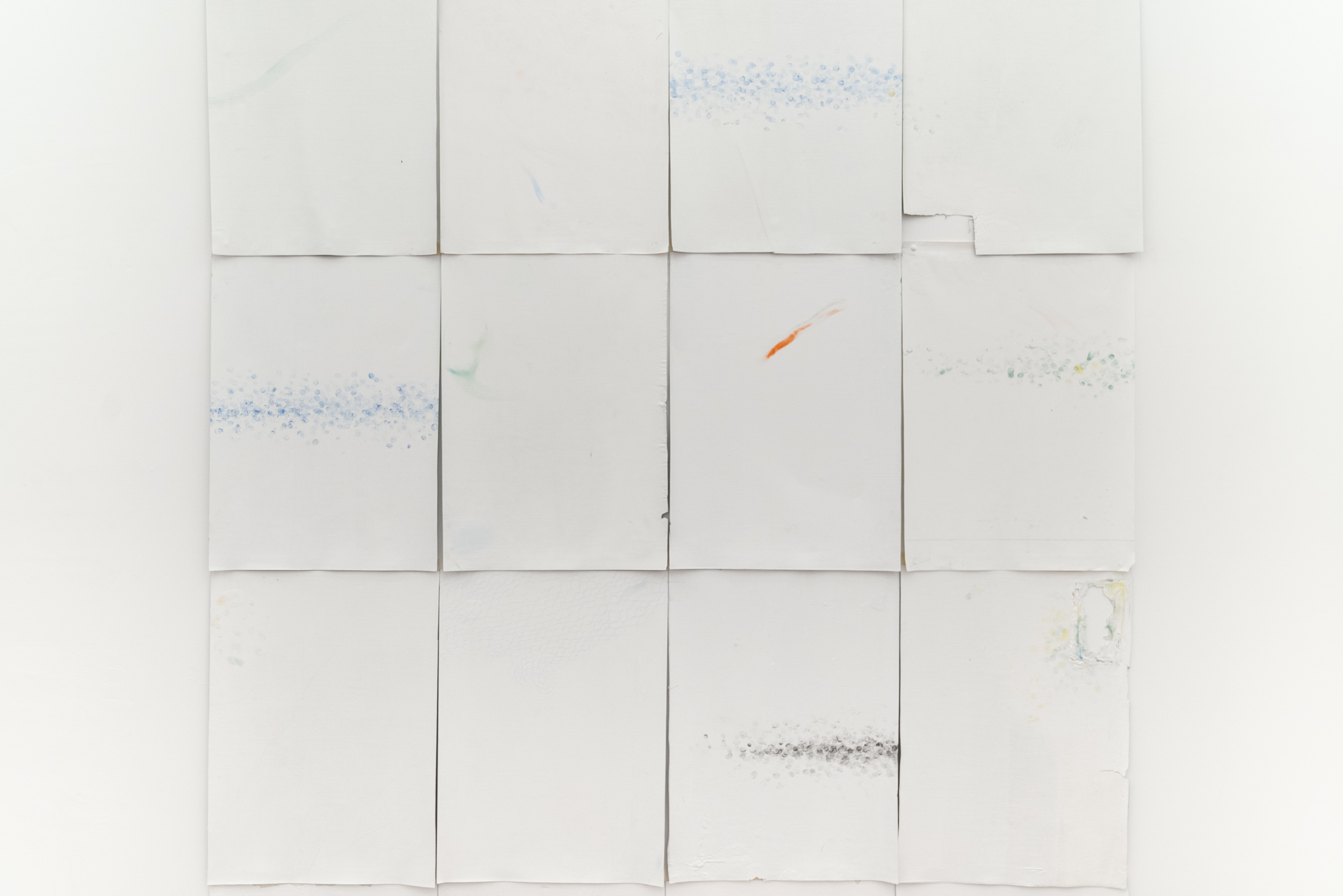
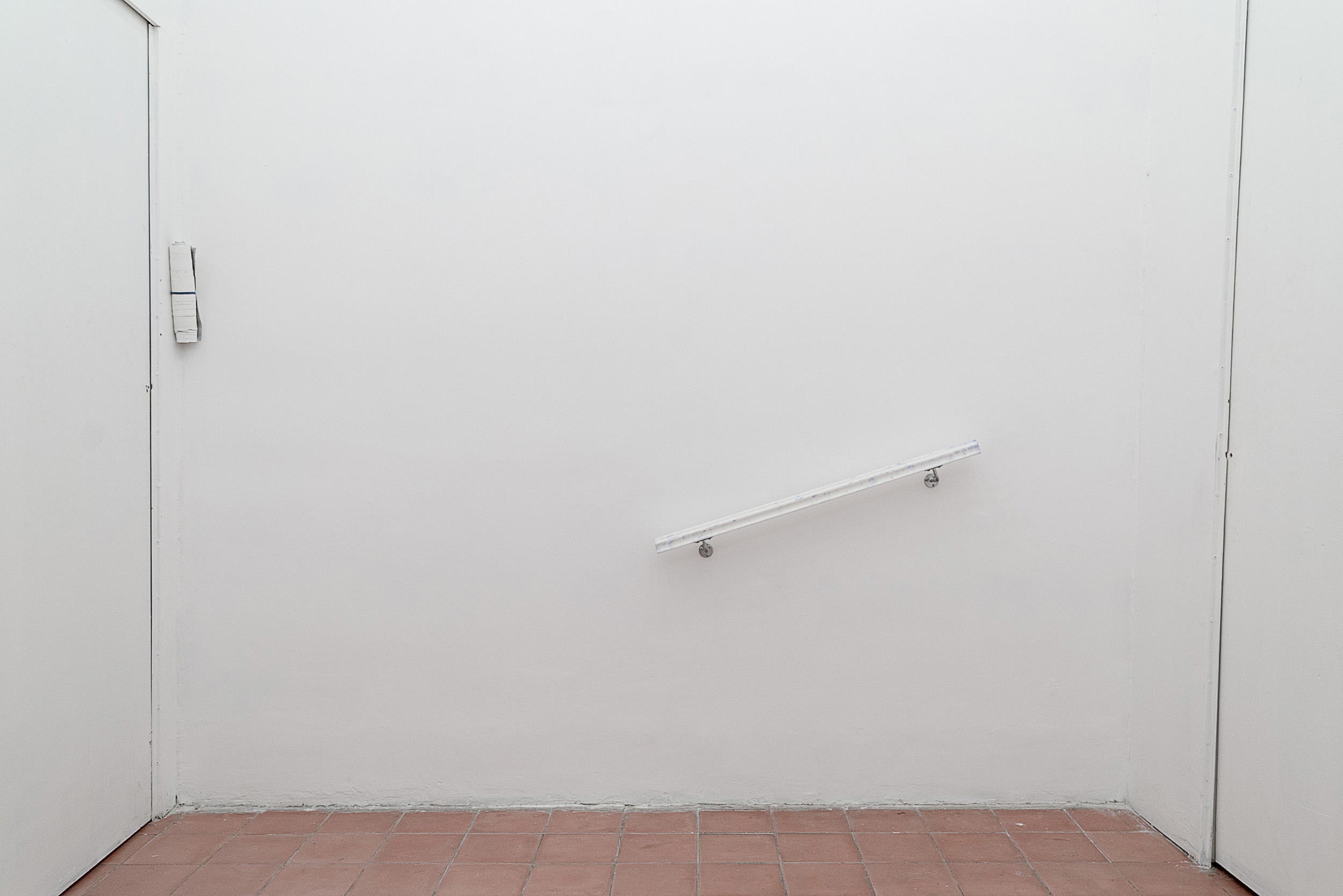
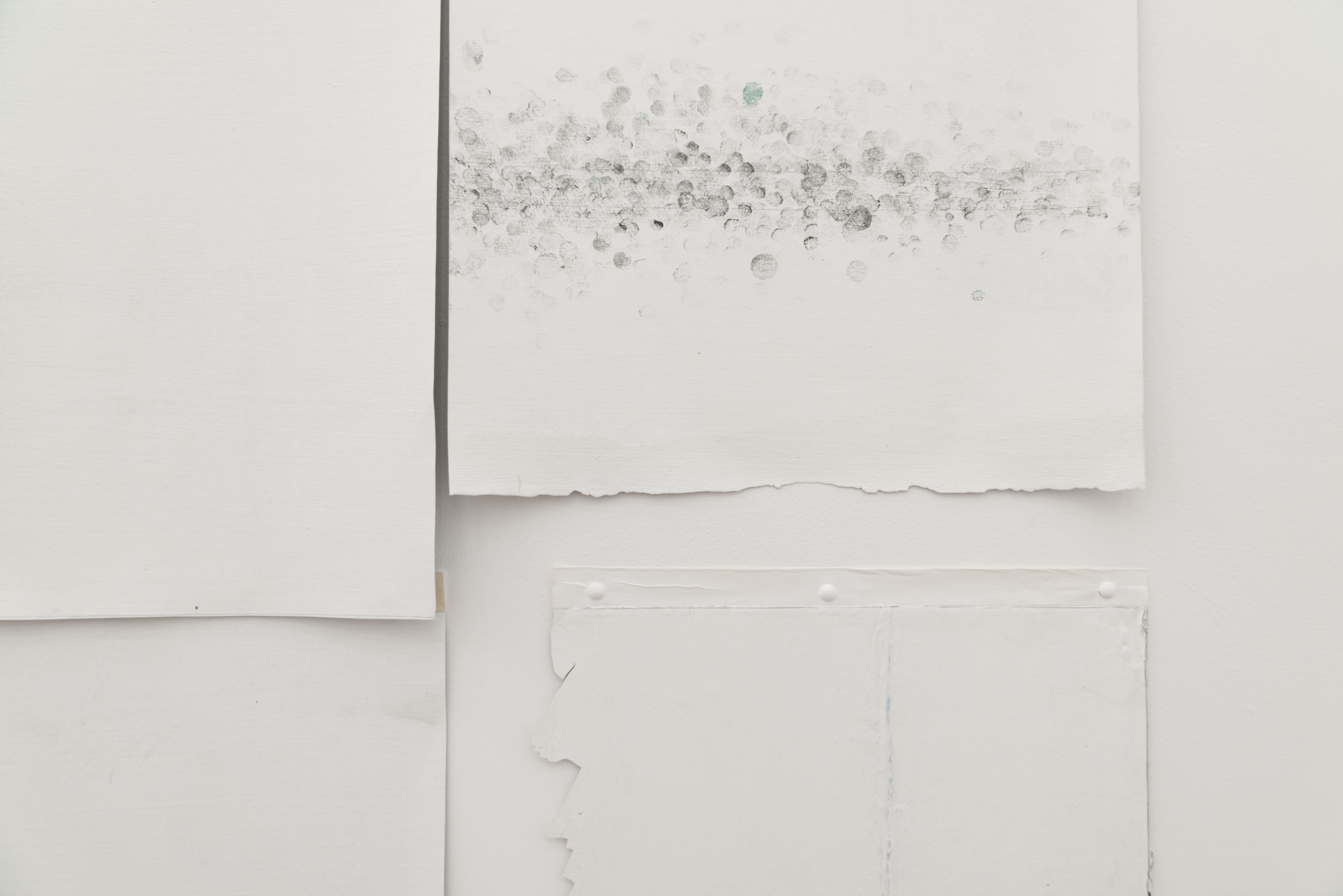
Of course, it is not an event in the sense of a great happening, but rather that it is happening on the medium, whatever it may be (canvas, wall, damper, handle, shelf, floor). That is to say, it is a gerund painting, for it gives the sensation of being in progress, even after it is finished - if this elusive, dancing painting can be said to end at any point. And hence, for the spectator, it is also a painting-encounter, for it is not as if one has to go and stand in front of it and passively contemplate it, as happens with great events, but rather it comes out as we pass and splashes our gaze upon it. In fact, what we have here is a delicate anti-big-success manoeuvre, which avoids finished forms, the display of skills, grand themes and totalizing moods (it is not Pollock, then). On the contrary, it is an ode to the minimal, everyday and decidedly subtle event. What we see is an accumulation of minuscule gestures, barely a wink, that could well go unnoticed. This does not imply that they are insignificant, but rather that their meaning is that of being slightly pictorial entities, occurring in the paradoxical corner where the complete absence of intention and the most absolute intentionality collide. To be or not to be form, that is the question here.
Art, as Paul Klee said, does not reproduce the visible but constitutes it. And this is very clear in Ana's work, which creates a sensitive reality of its own, capable of colonizing the space, in the most tenuous way possible; without fuss, a little like mould would do. Rather than appearing here and there, this painting develops: it begins with something like a microscopic spore - a first stain, a shy trace - which germinates when it comes into contact with the surface, and there it grows and reproduces.
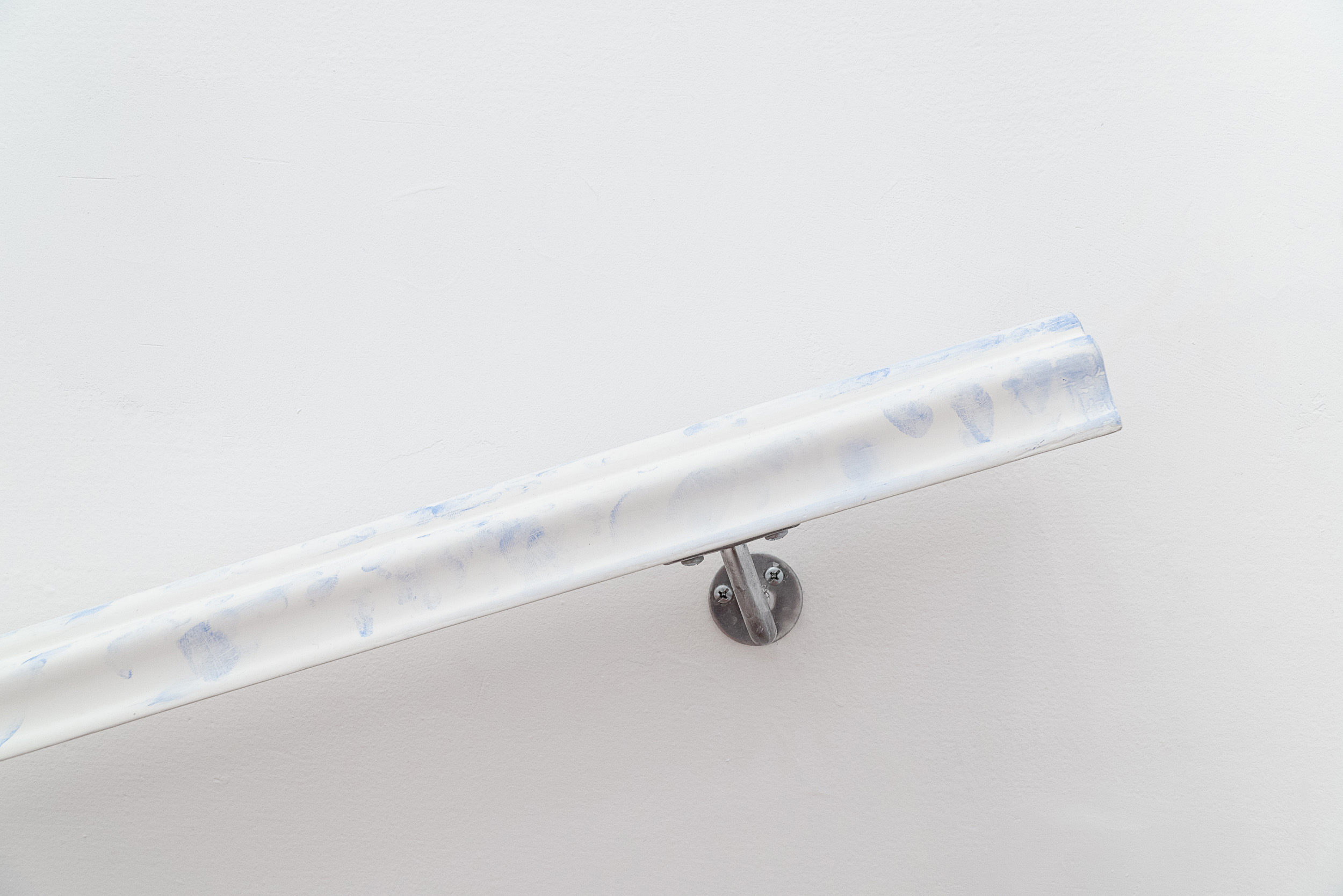
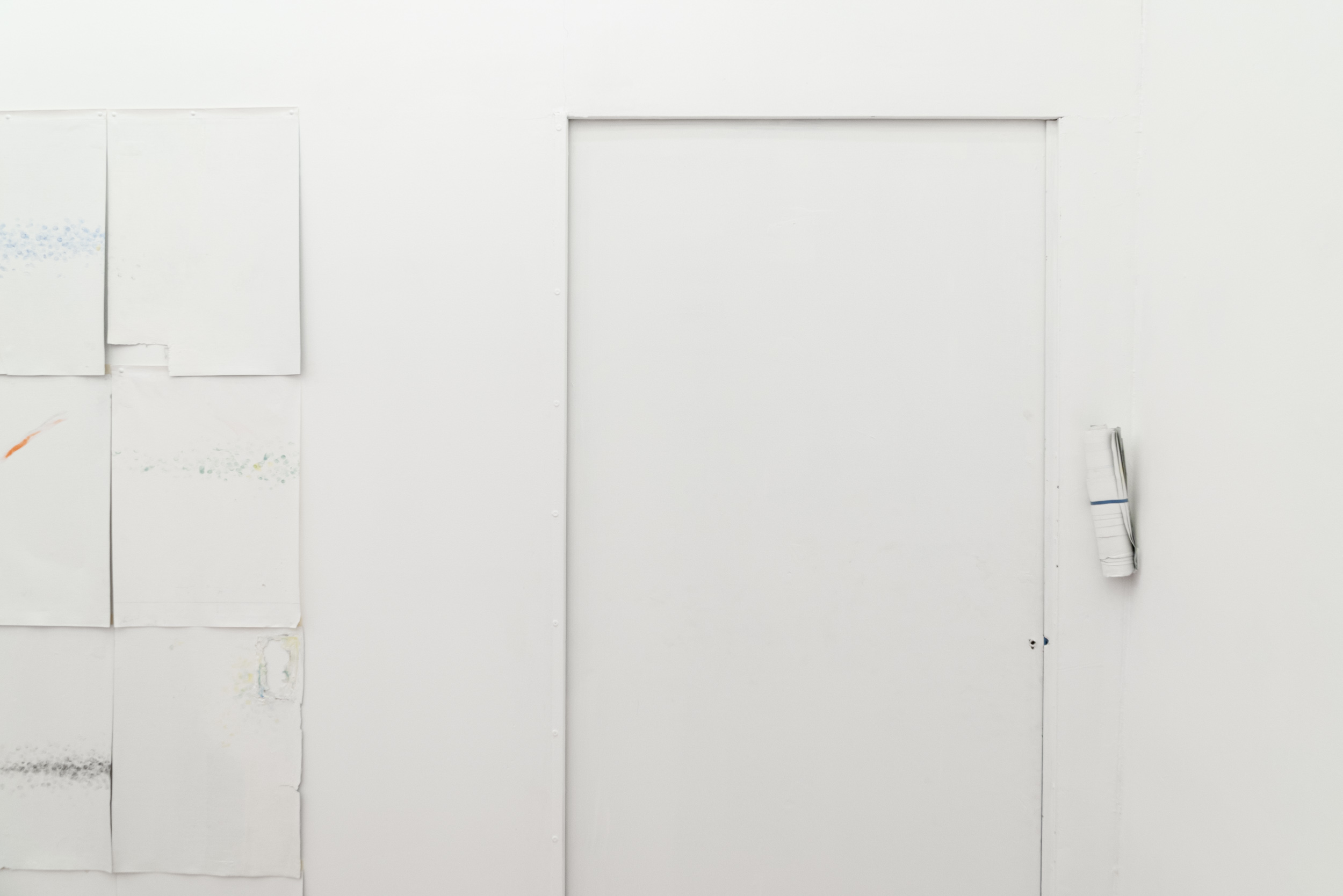
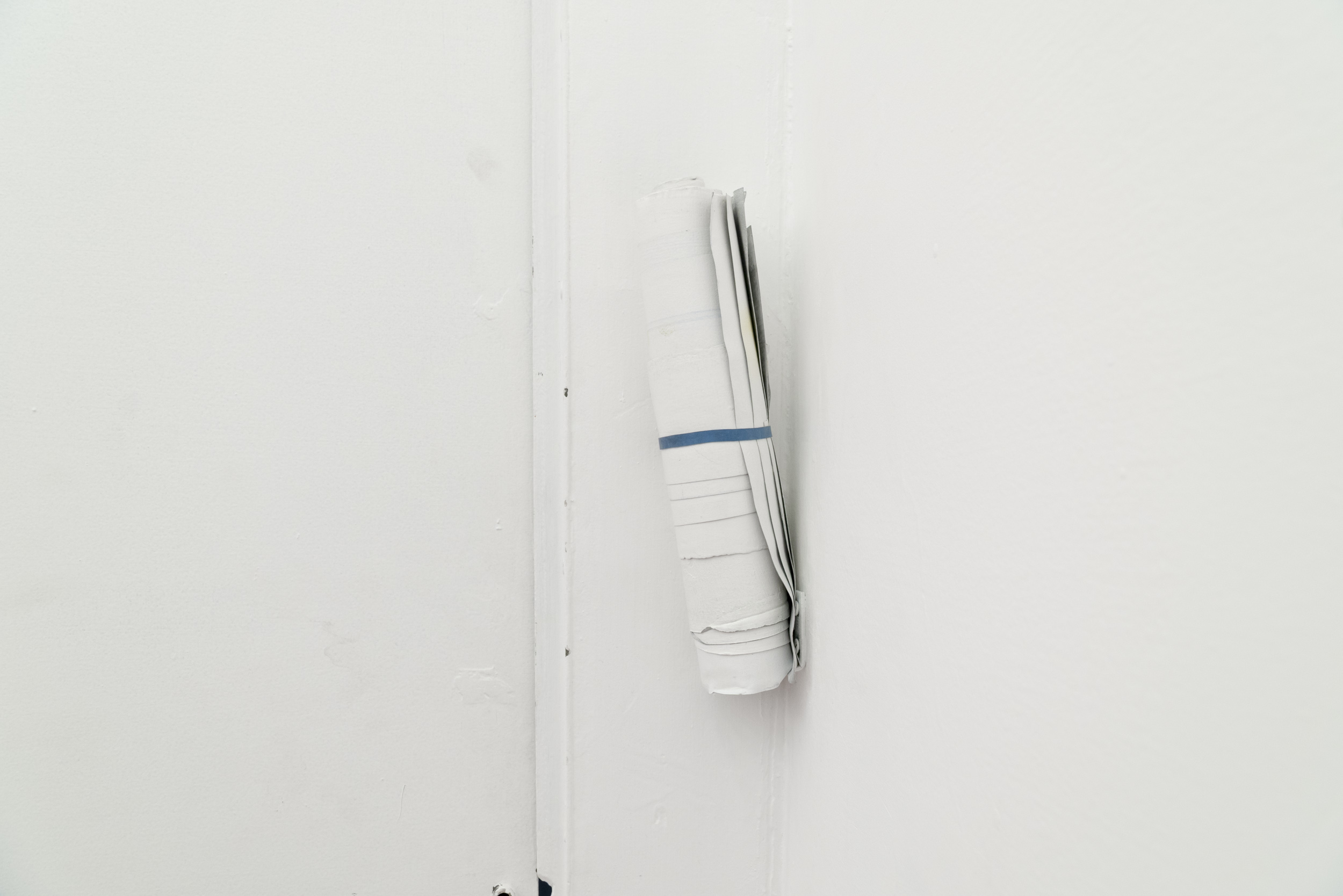
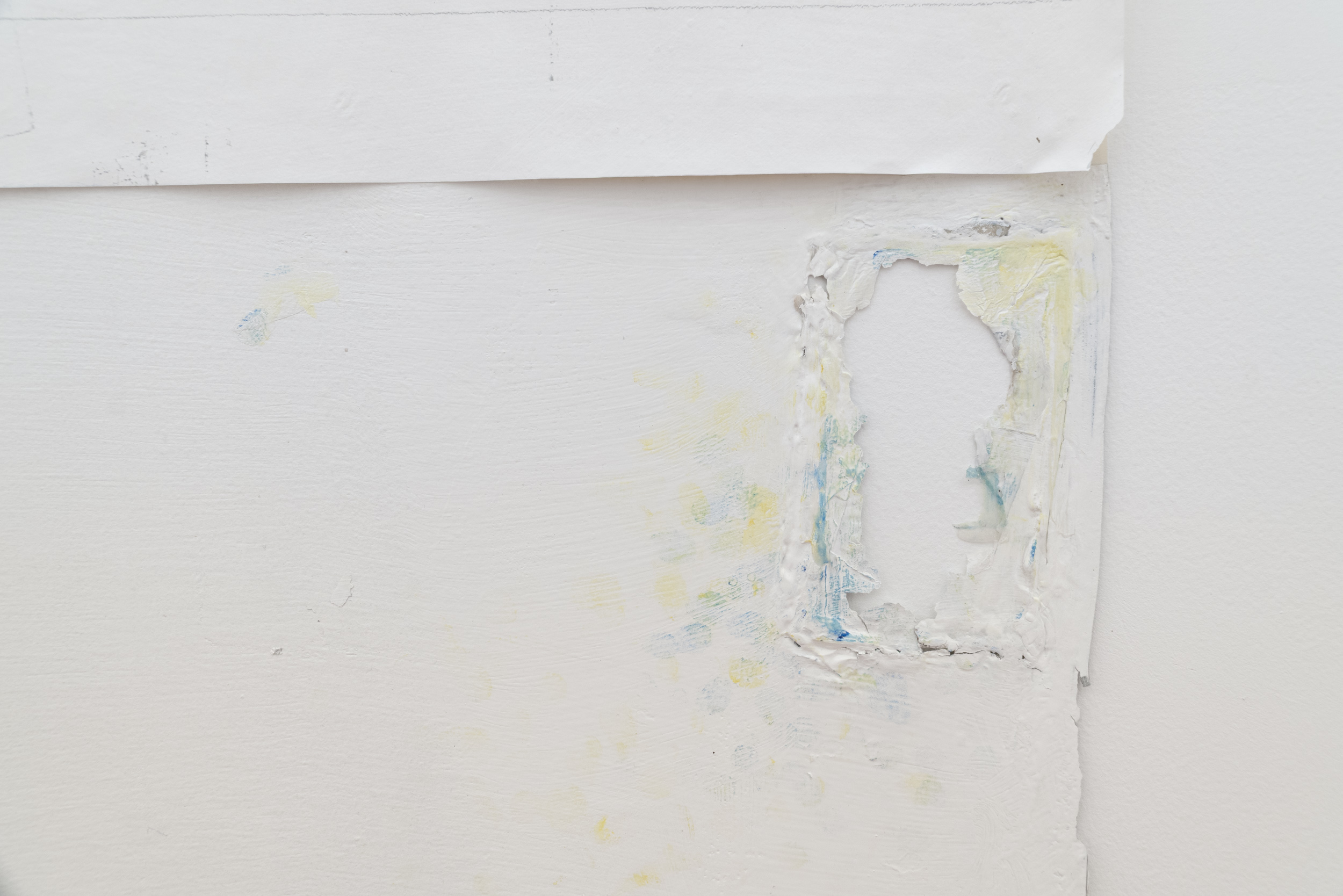
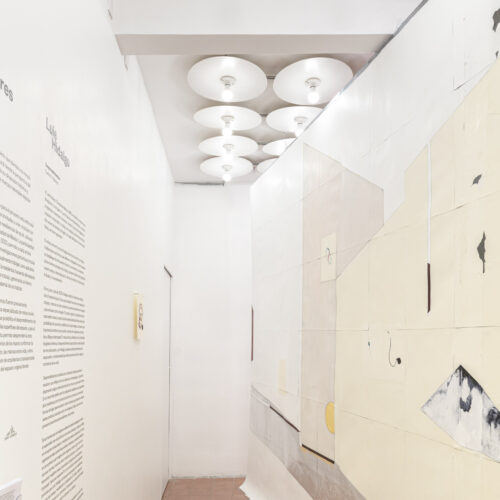
Like the cave paintings that Ana saw in the Sierra de Capivara, in Brazil, here everything is based on a vital rather than an aesthetic impulse. We are faced with traces that managed to slip through the folds of life itself. In this case, literally, since these pieces come from the walls of a room in which Ana lived for several weeks. All the surfaces around her then became susceptible to receive pigment at any moment, and the room thus became a space of uninterrupted coexistence with painting. As she explains, the interventions are done intuitively and cumulatively: ‘production time,’ she says, ‘involves spending time in the space doing other things’, for example, sleeping, eating, reading, washing dishes and, in one of these turns, putting her hand on the light switch and turning it blue, then coming back and adding a drop of yellow.
Ana's aim, as can be seen, is not to paint, or even to really make a work. Her aim is to encourage the growth of spots of colour that nonchalantly populate the space until they cross, at some point, the thin threshold that separates what seem to be small accidents from full-fledged drawings. And this is how she answers the question of what is the minimum that is needed for something to be considered, for example, a mural. Here we see it: nothing but a wall, a hand and a will of matter, which insists on expanding in the manner of constellations; only here the stars - those vaporous, loose notes - depend on much more earthly things, like teatime.
Ana Bidart (Montevideo, 1985)
Ana Bidart (b.1985, Montevideo) Visual artist working between Mexico and Uruguay. Her practice, which ranges through different media such as drawing, painting, site-specific installations and performance, reflect on how we perceive time through the body and matter in everyday life. She has shown her work in Latin America, the United States and Europe, including the National Museum of Visual Arts, Montevideo; Amparo Museum, Puebla; Cabañas Museum, Guadalajara; Proyecto Paralelo, ESPAC and Sala de Arte Público Siqueiros, Mexico City; W-galería, Buenos Aires; Bienvenu Steinberg & J Gallery, New York and Galerie Perrotin, Paris. In 2023, she was an artist in residence at Delfina Foundation, London, within the FAARA Conecta program in alliance with Fundación Ama Amoedo. She is the author of Un golpe de suerte, a drawing book for children published in Mexico by Piedra Ediciones with the support of the Jumex Arte Contemporáneo Foundation.