Maria Anwander
nothing to declare
January 10th, 2026
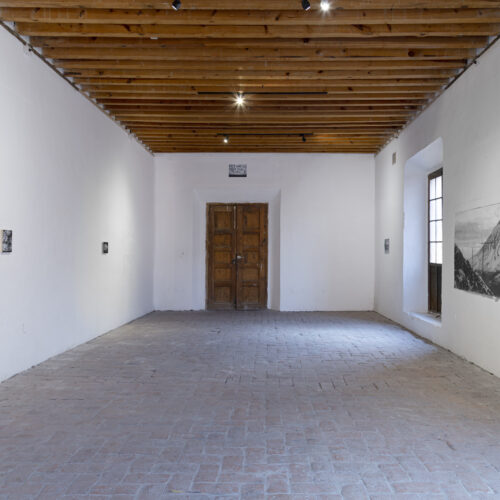
Maria Anwander (1980 in Bregenz, Austria; lives in Berlin, Germany) explores the hierarchical structures of society, focusing primarily on gender politics and social inequality. In her exhibition ‘nothing to declare’, she shifts her examination of power claims into outer space, tracing the footsteps of her own personal past.
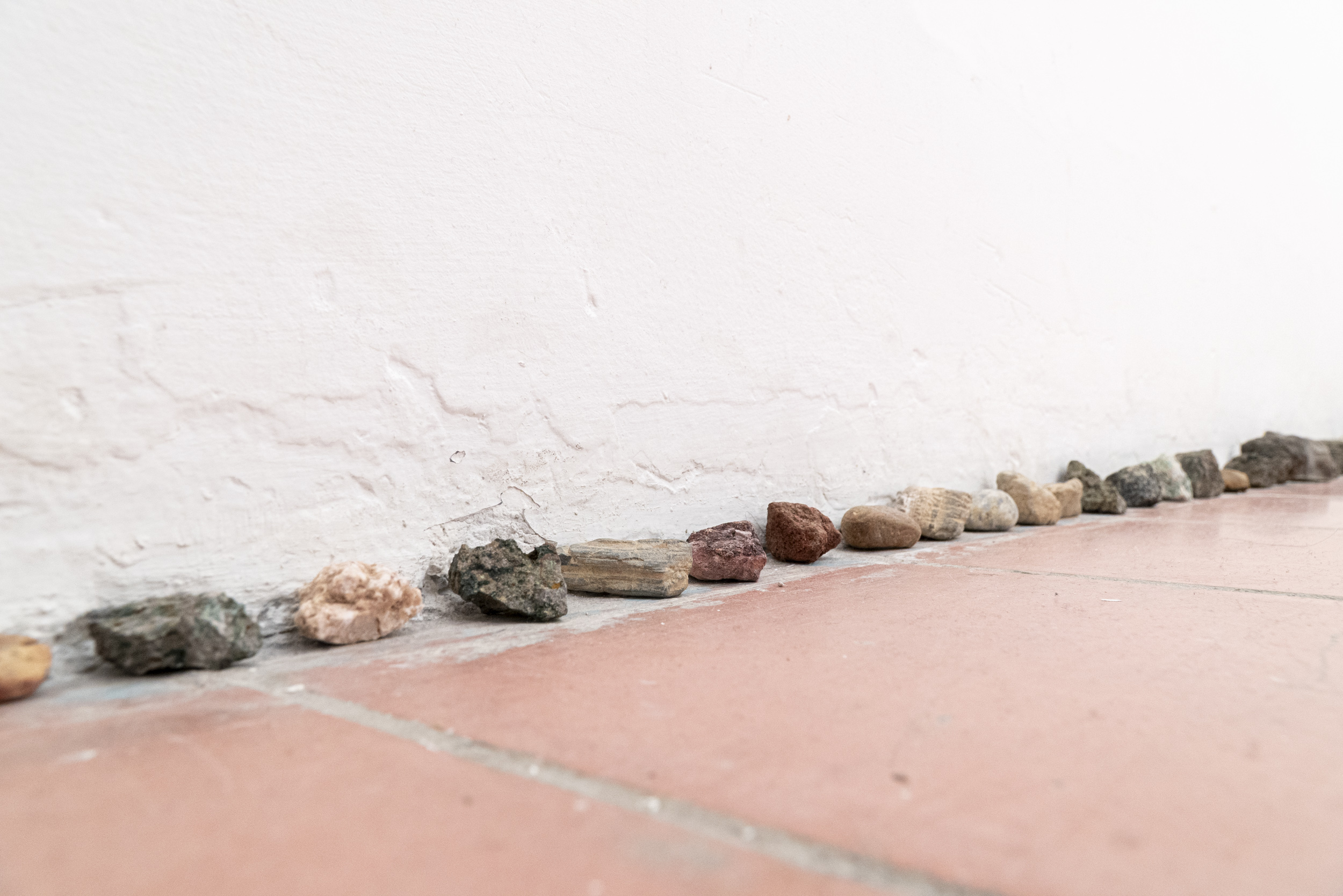
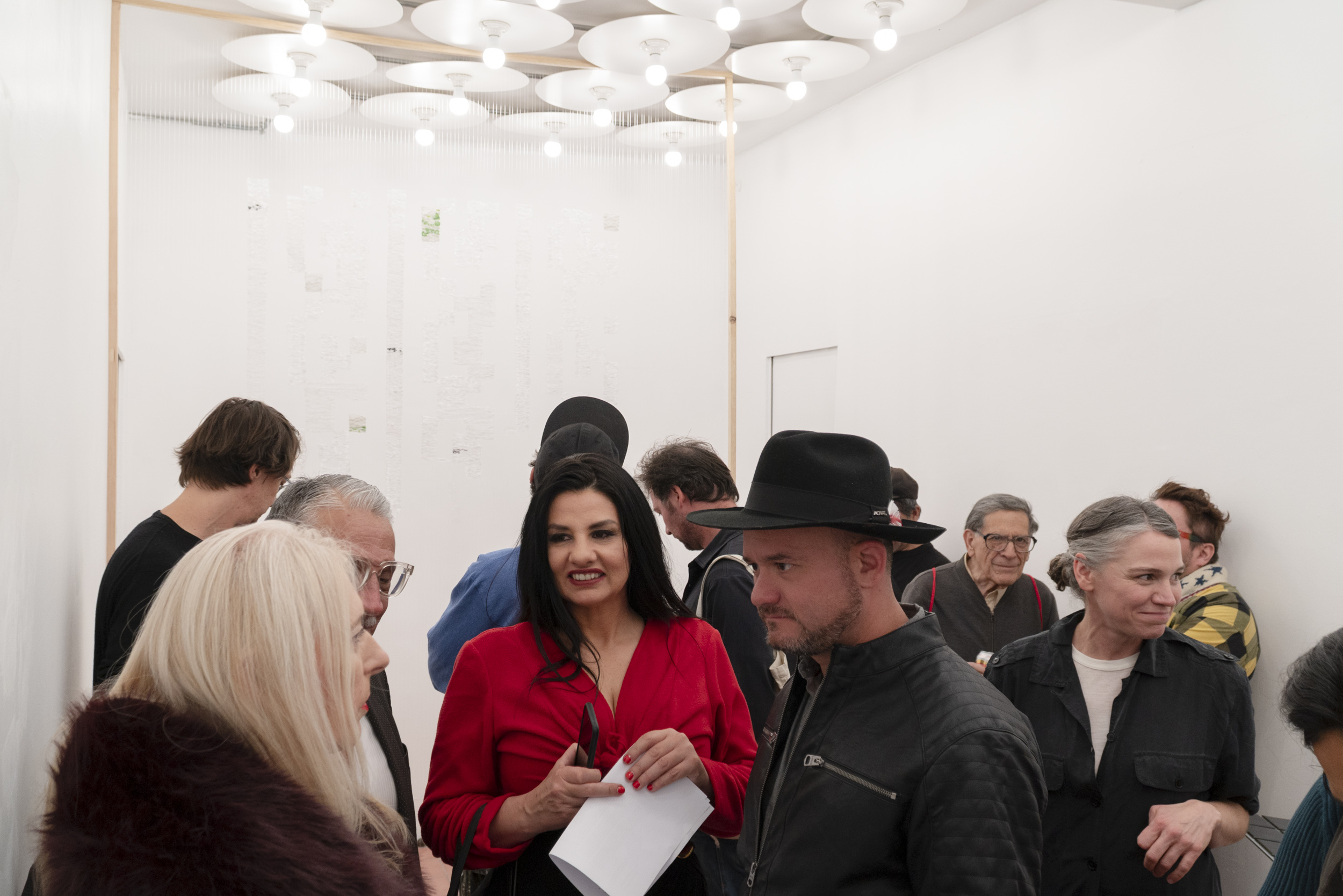
The exhibition combines archaic forms and natural substances with technological and industrial materials to create a tension between primitivity and the promise of progress. Her works reference the human drive for knowledge, control, and power, while simultaneously addressing the careless treatment of our planet.
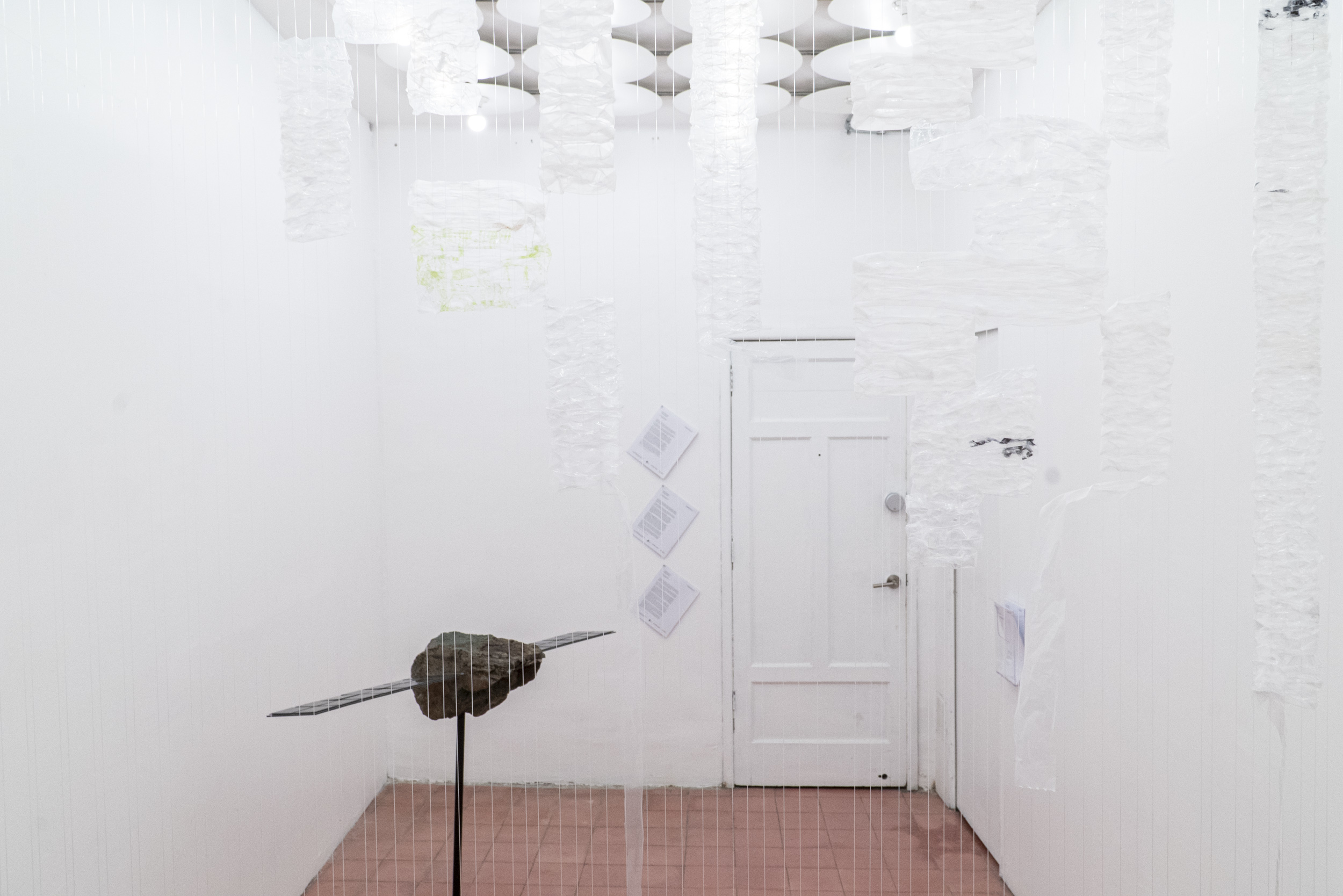
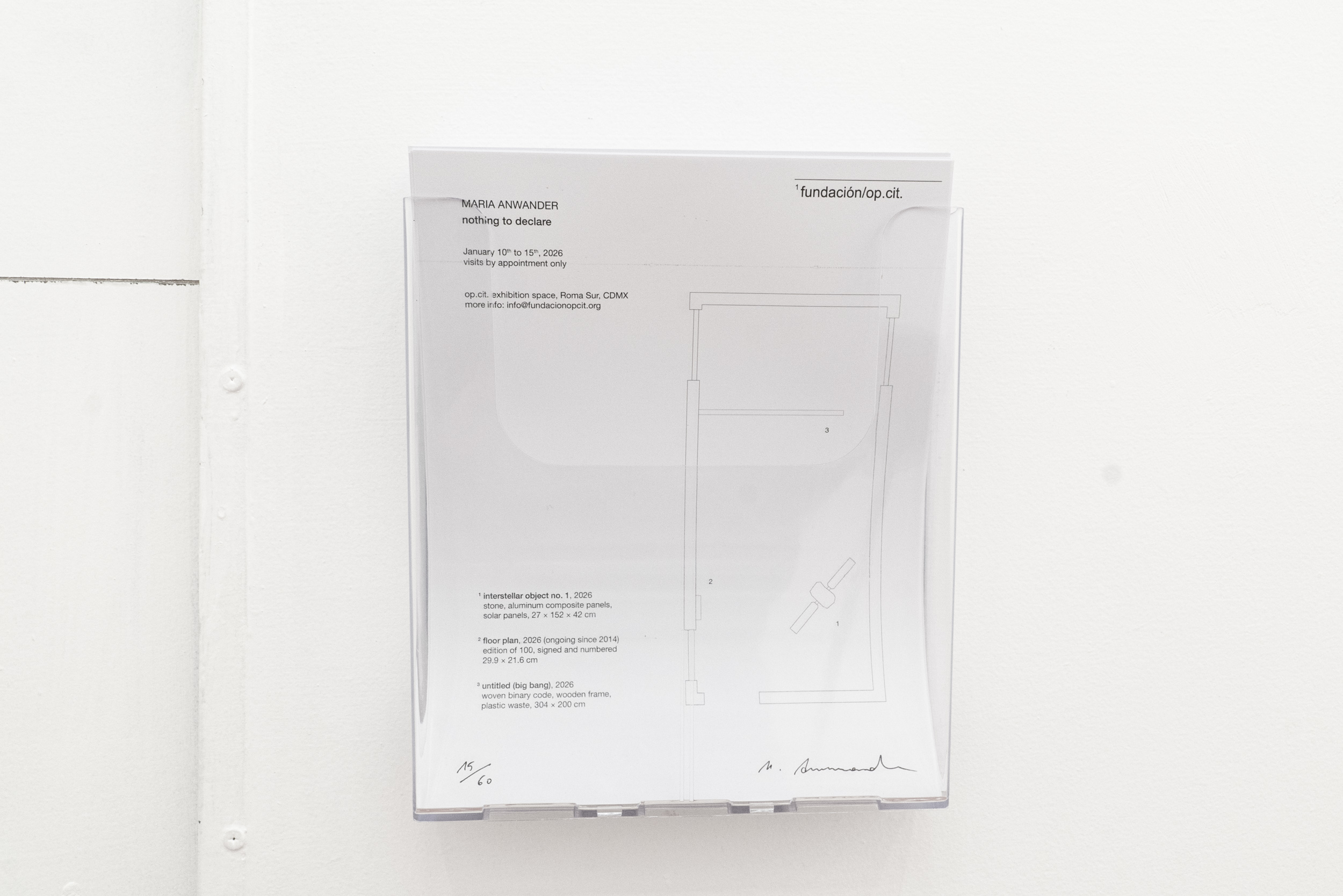
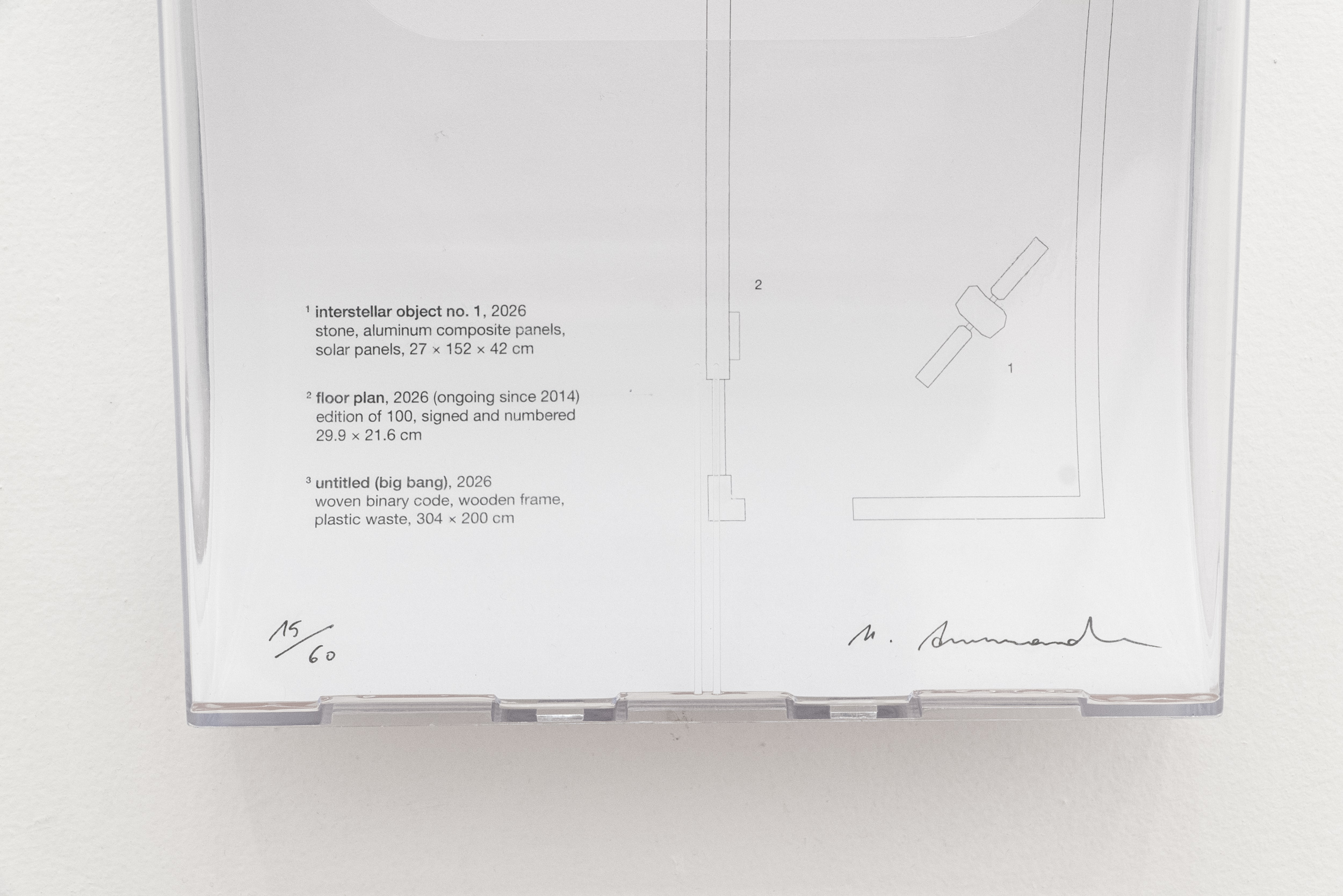
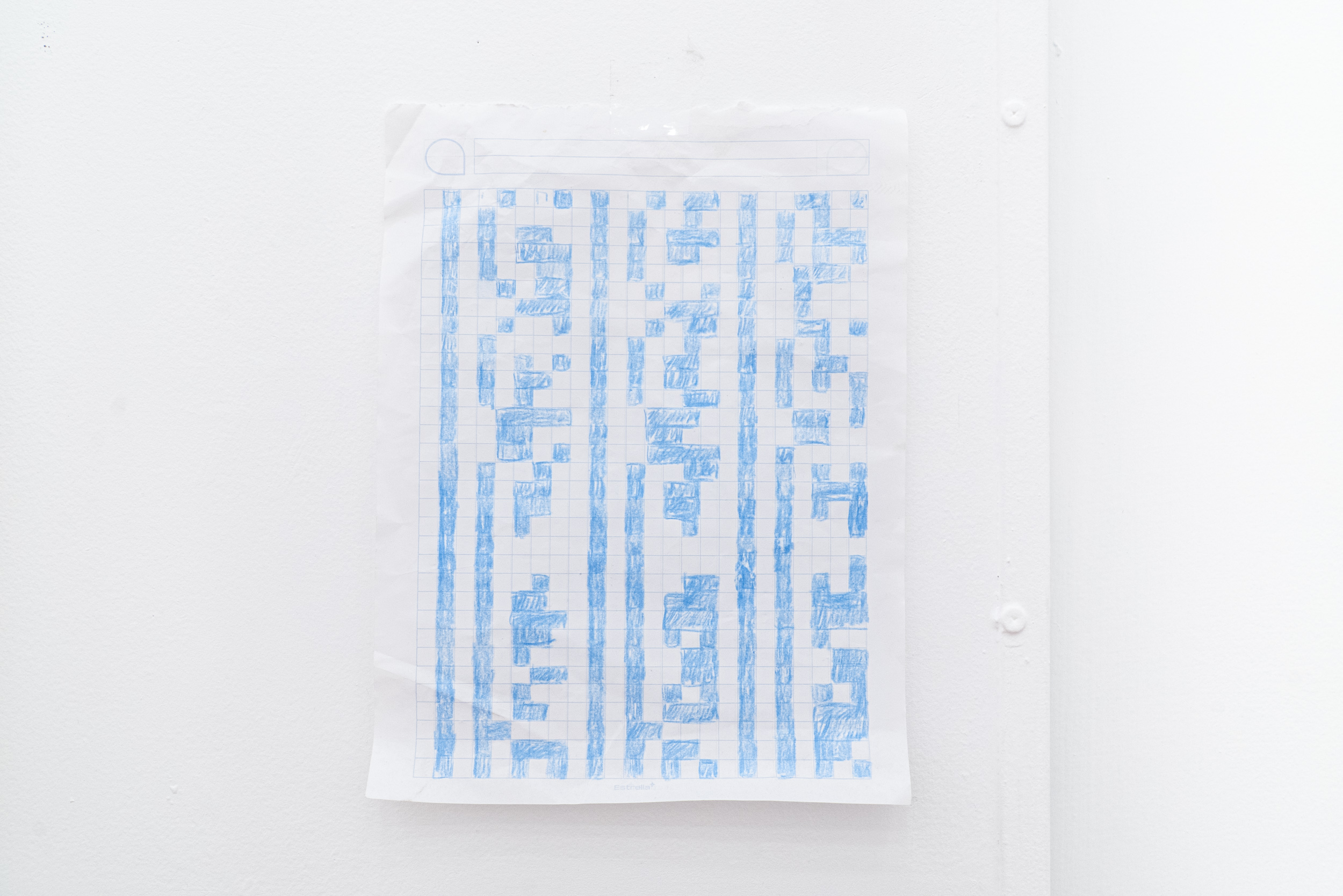
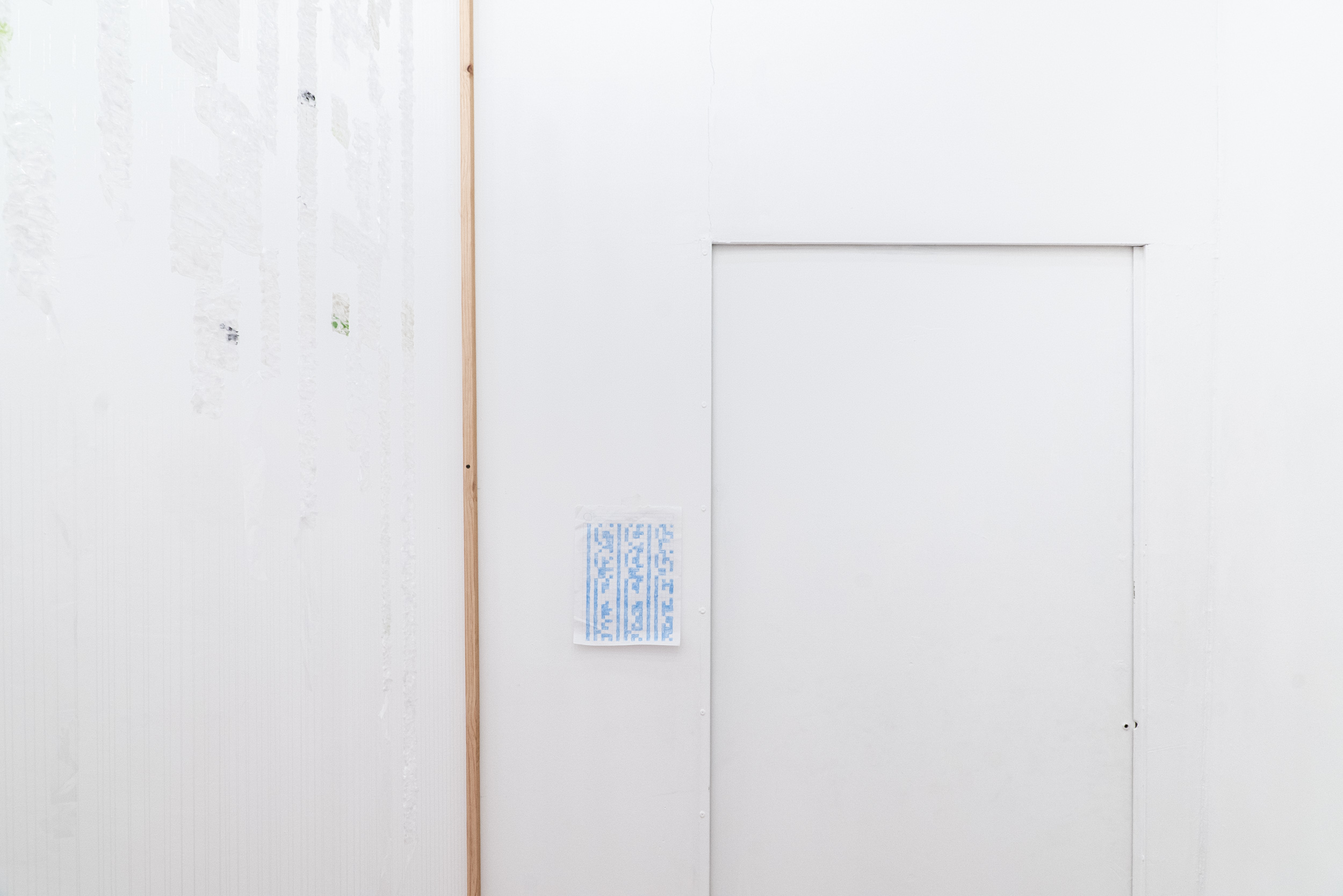
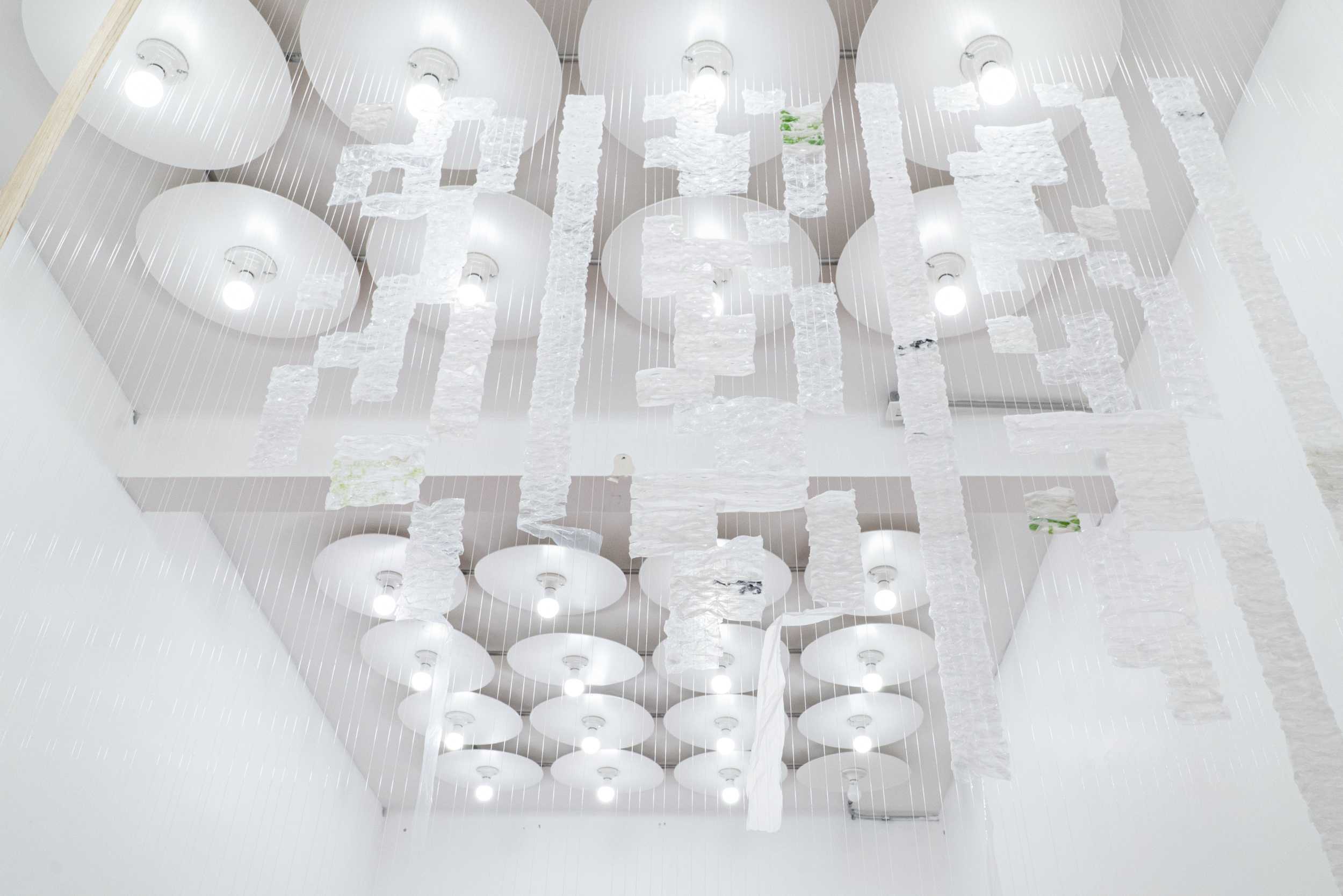
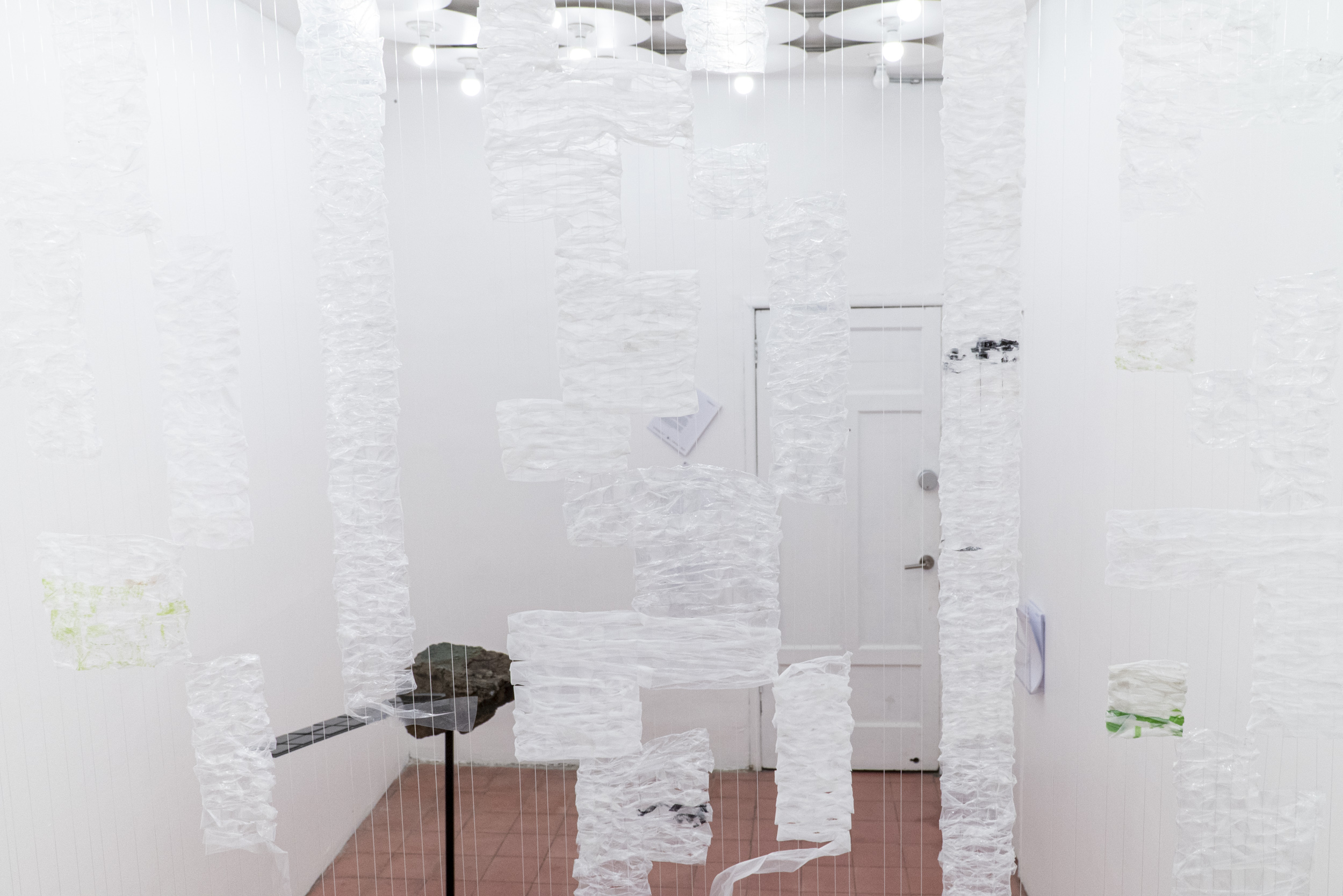
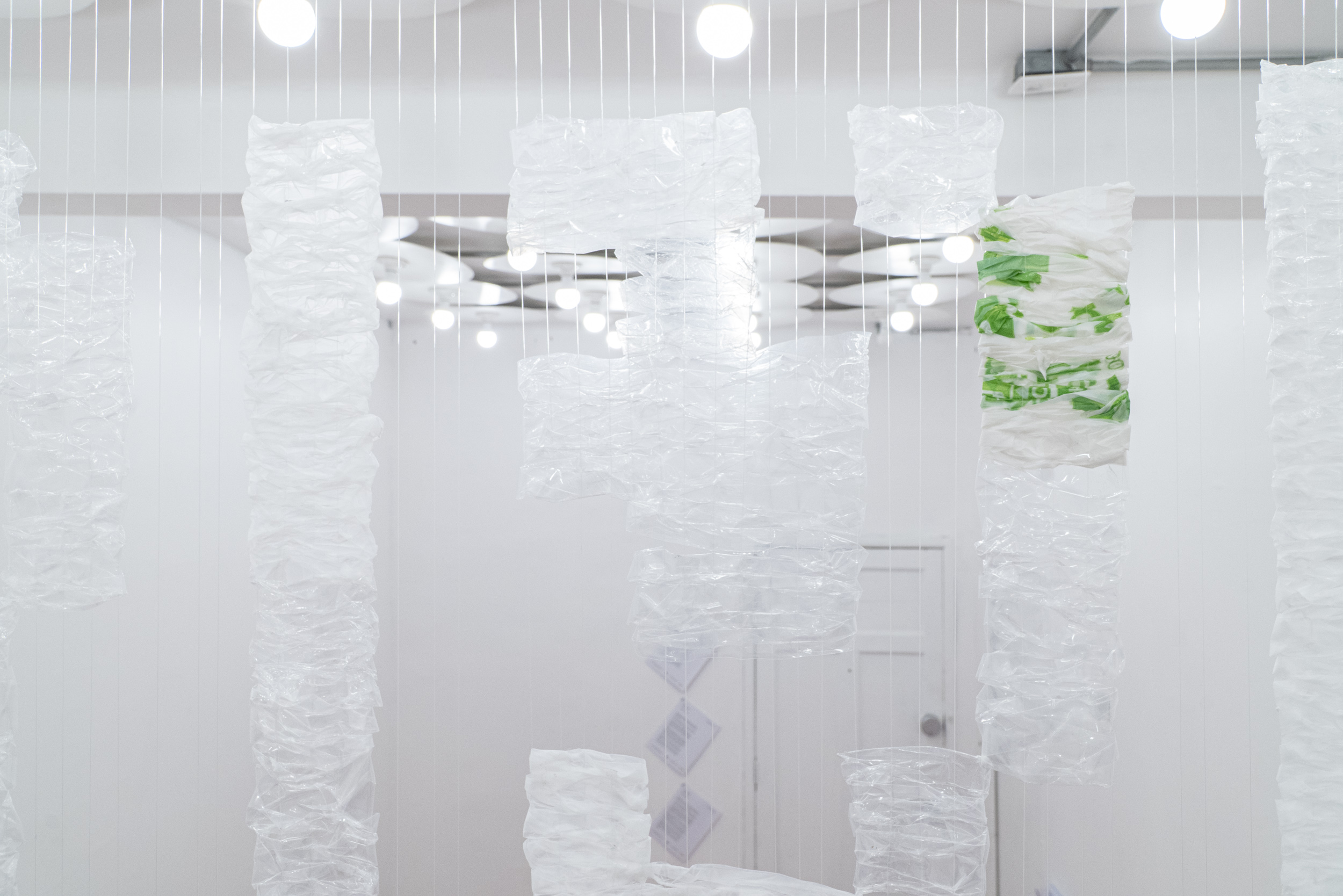
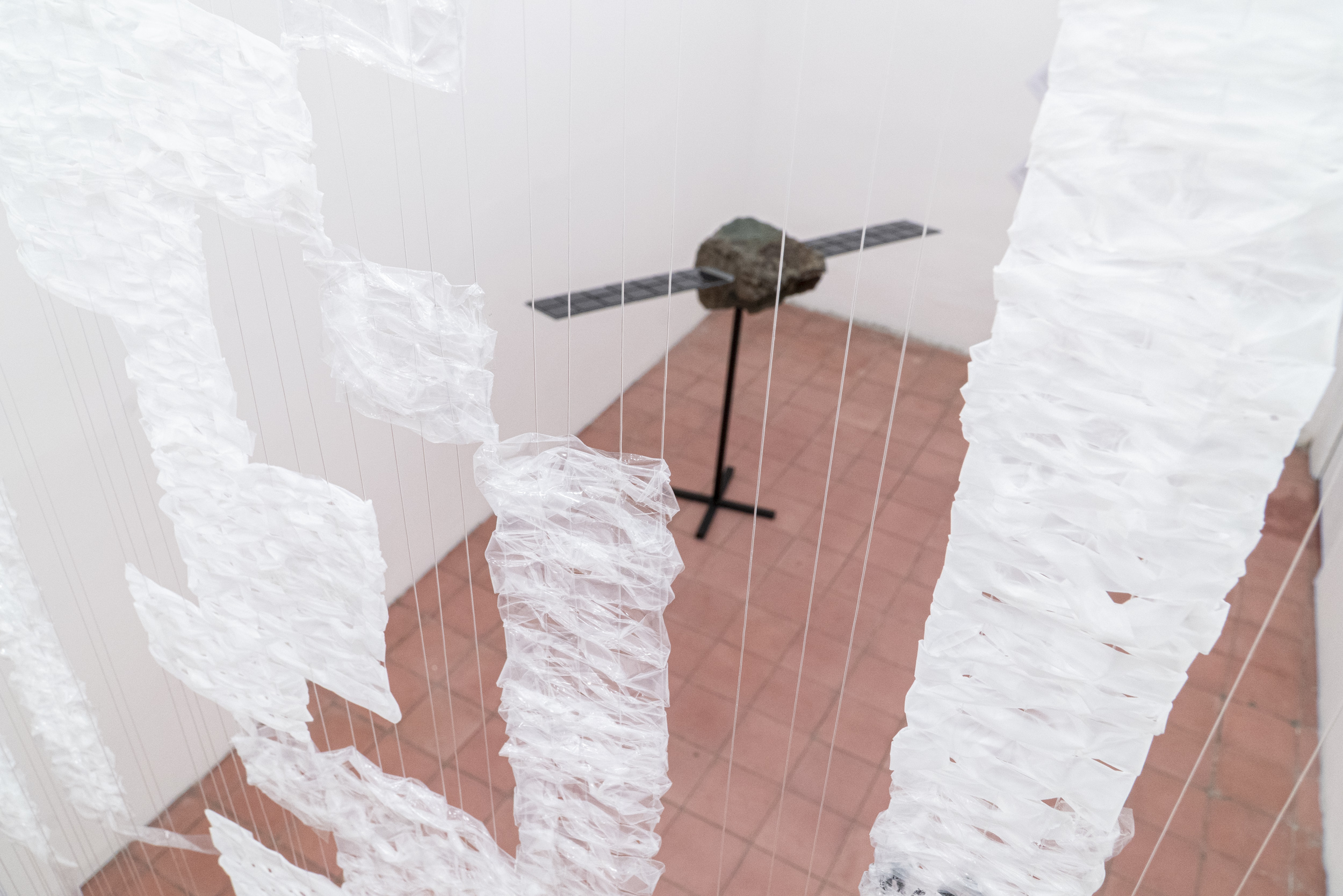
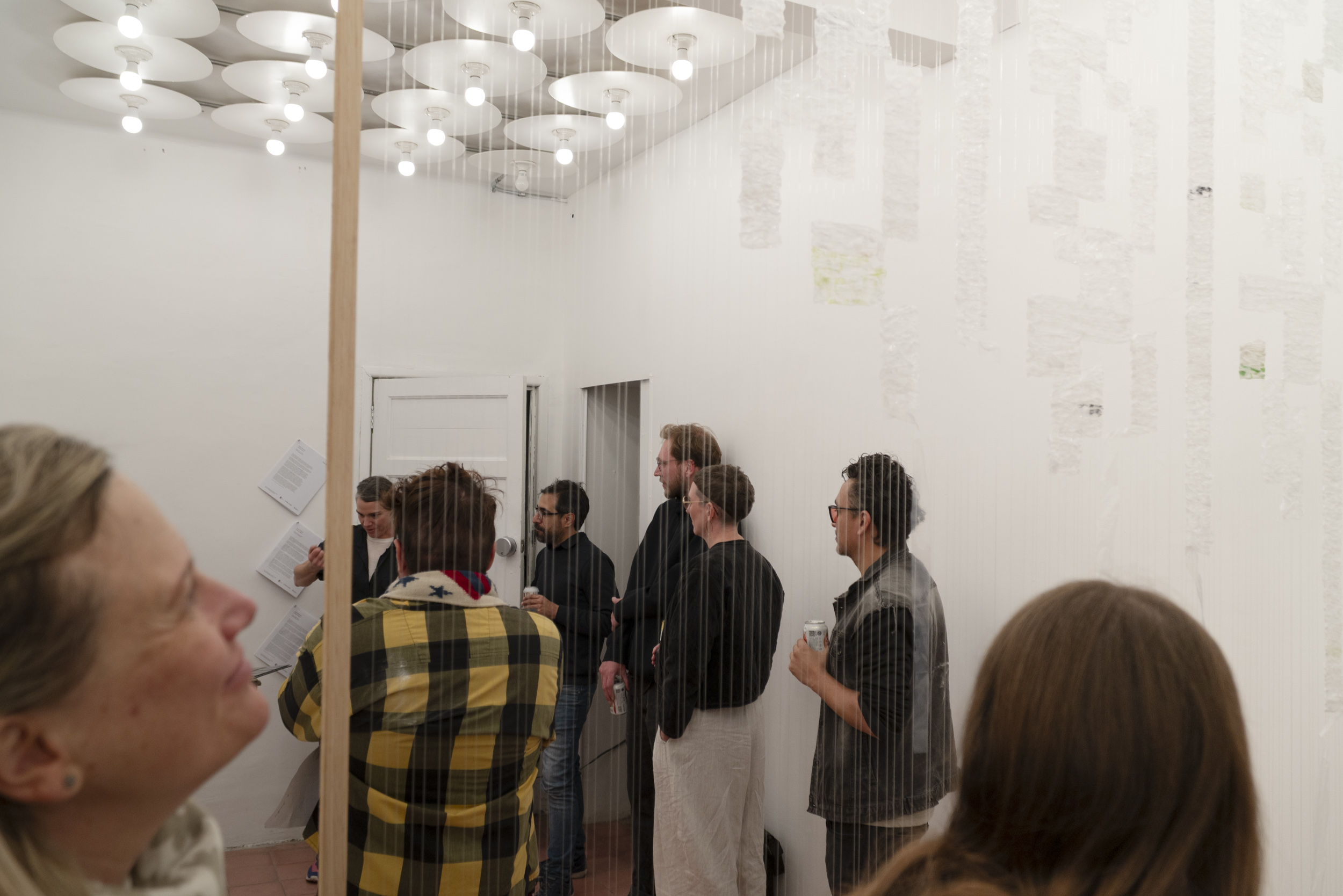
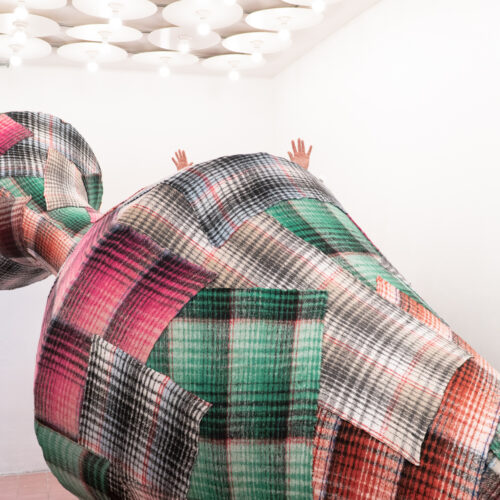
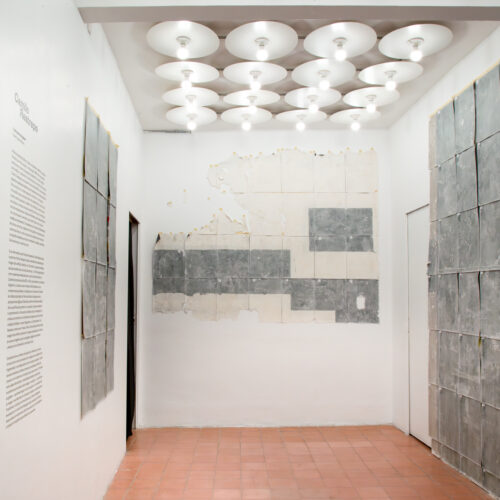
In the rear section of the gallery, the work ‘Untitled (Big Bang)’, woven from plastic waste, is on display. Drawing on the ancient tradition of textile production, Anwander weaves plastic remnants found on the street into an abstract pattern. The piece features a small section of binary code derived from an audio file created in 2003 by John G. Cramer, Professor of Physics at the University of Washington in Seattle. Based on data from cosmic background radiation, Cramer simulated the sound of the Big Bang during the first 760,000 years of the universe.1 Anwander further fragments this simulation and weaves it into a graphic pattern as binary code.
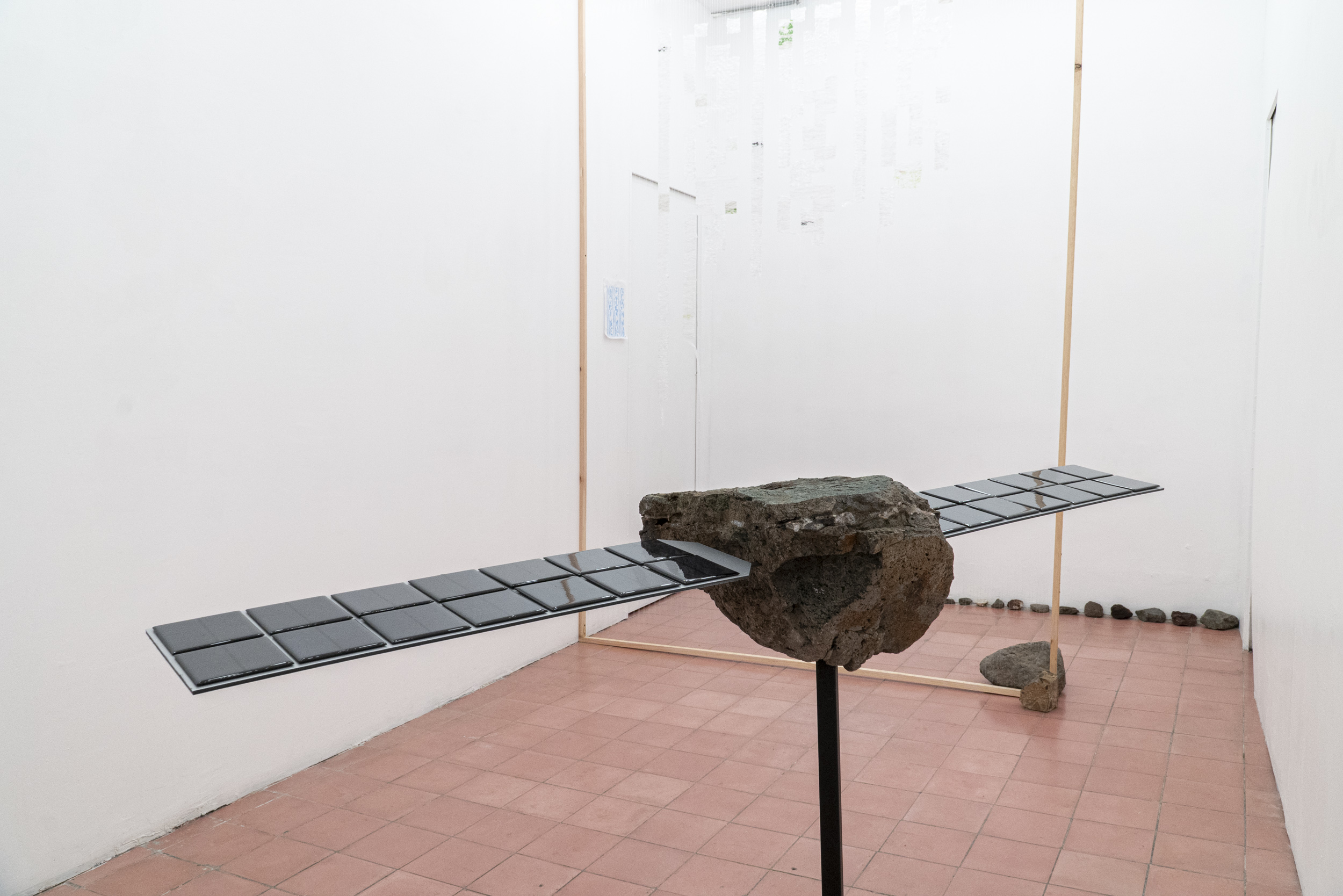
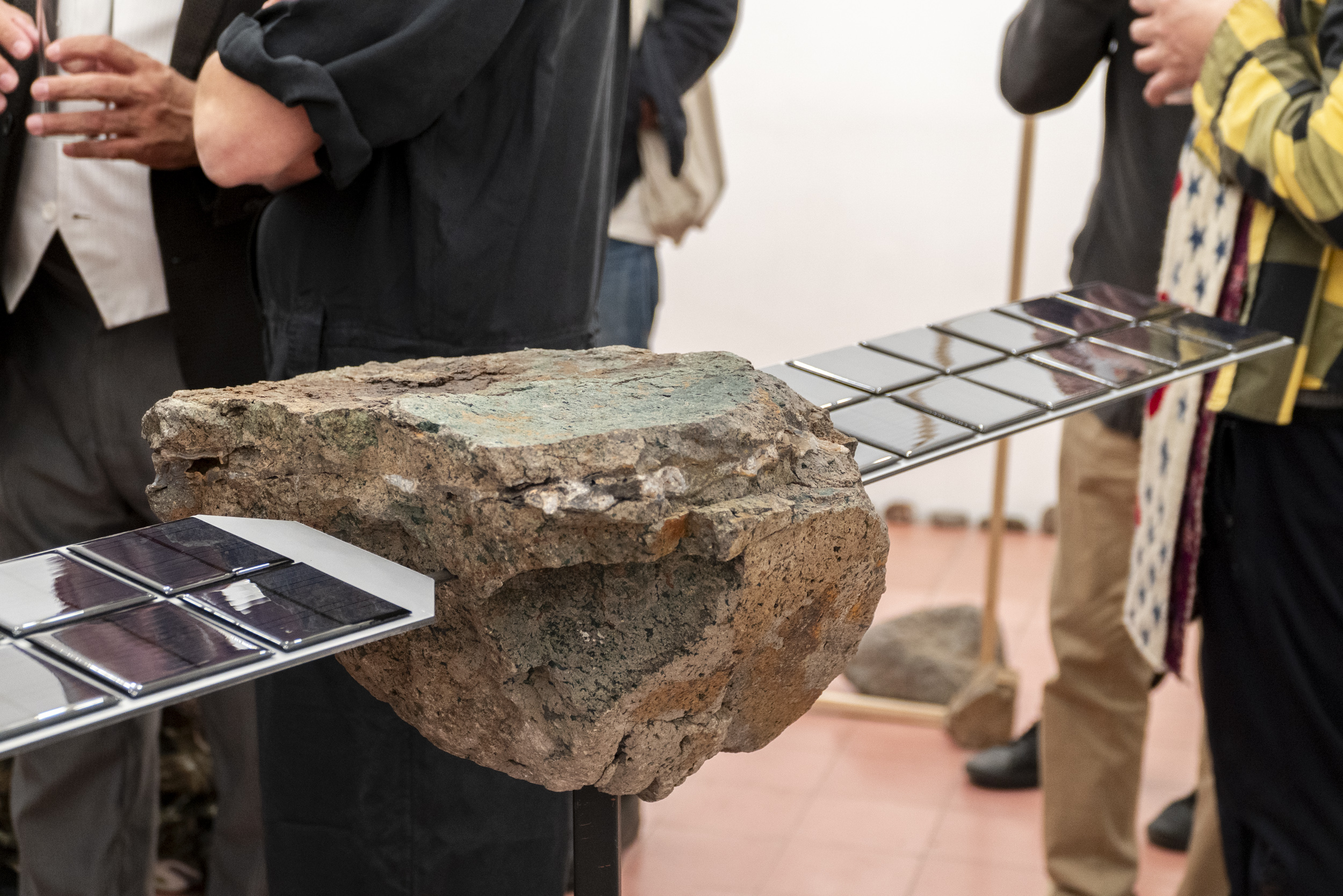
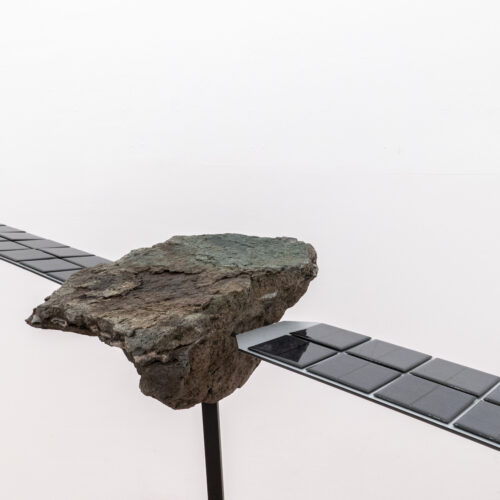
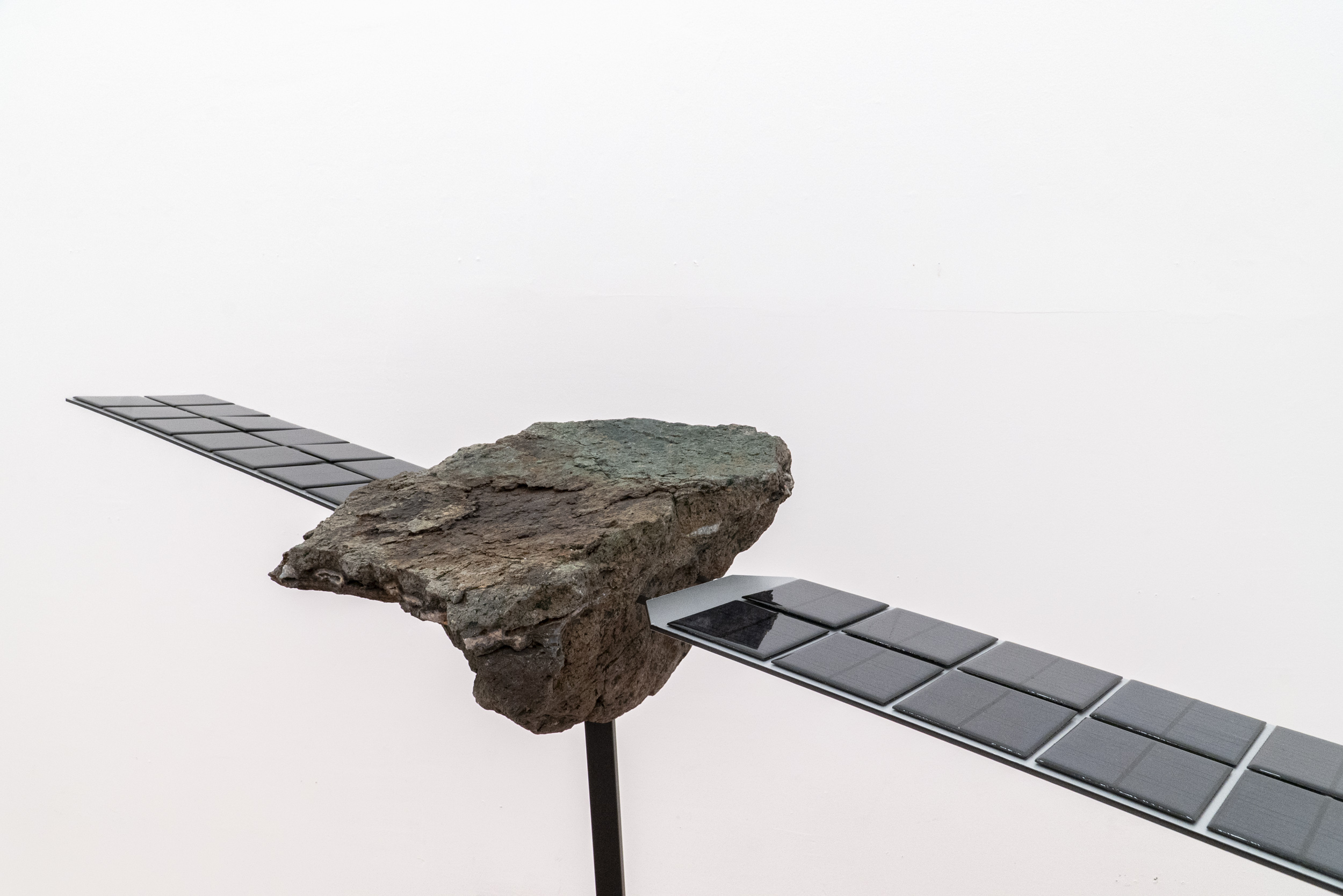
For the second work, the artist traveled through Oaxaca in search of a suitable boulder for her installation. In ‘interstellar object no. 1’, she brings together two radically different timelines: she equips a rock millions of years old – formed by natural processes and containing crystalline inclusions – with technological-looking wings made of solar panels. This intervention transforms the archaic found object into a hybrid sculpture resembling the tens of thousands of satellites currently in Earth's orbit. This material contradiction contrasts the astronomical timespan of Earth's history with the short-lived nature of modern high-tech industries. Flightless and firmly anchored to the ground, the object represents for Anwander a place of longing for a journey into the planet's past, as well as a fragile prototype of a future where the boundaries between nature and technological artifacts blur.
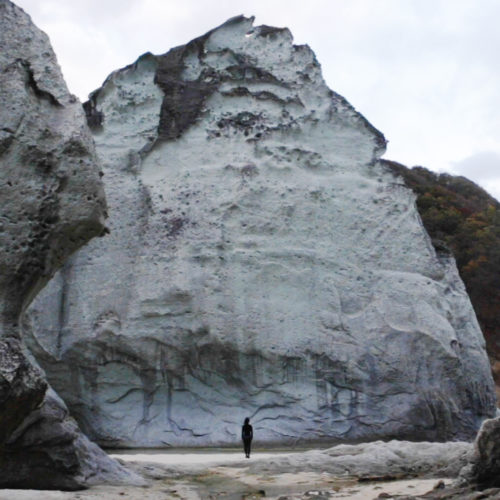
Maria Anwander’s exploration of space and its nature stems from her fascination with meteorites and the story of a boy who, as a child, witnessed one falling and took it home. That boy was the artist’s late brother. At the time, she showed no particular interest in the stone or its story; however, thirty years later, the tale has become a constant presence. Because the object has been lost, it is no longer possible to verify whether it was an authentic meteorite or simply an ordinary stone that came to life through a child’s imagination. In this way, Maria Anwander’s search for meteorites—or her attempt to create one herself—becomes an emotional search for her own brother.
Maria Anwander born in Bregenz, Austria, in 1980 and lives in Berlin, Germany. She studied media art and sculpture at the Academy of Fine Arts in Vienna. As a conceptual artist, her artistic work encompasses video, photography, installation and interventions in (semi-)public spaces. Anwander deals with hierarchical structures, focusing on gender politics, social inequality and the influence of new technologies on our society. Her works have been presented in numerous solo and group exhibitions internationally, including Kunst Halle Sankt Gallen (CH), Kunstverein Friedrichshafen (DE), Kunsthalle Mainz (DE), Kunstmuseum Liechtenstein (FL), Kunstmuseum St. Gallen (CH), Museo de Arte Carrillo Gil in Mexico City (MX), Künstlerhaus Vienna (AT) and AC Institute in New York (US). She has also participated in the Moscow Biennale for Young Art, as well as in partner projects of the 4th Moscow Biennale of Contemporary Art (RU) and Manifesta 12 in Palermo (IT).